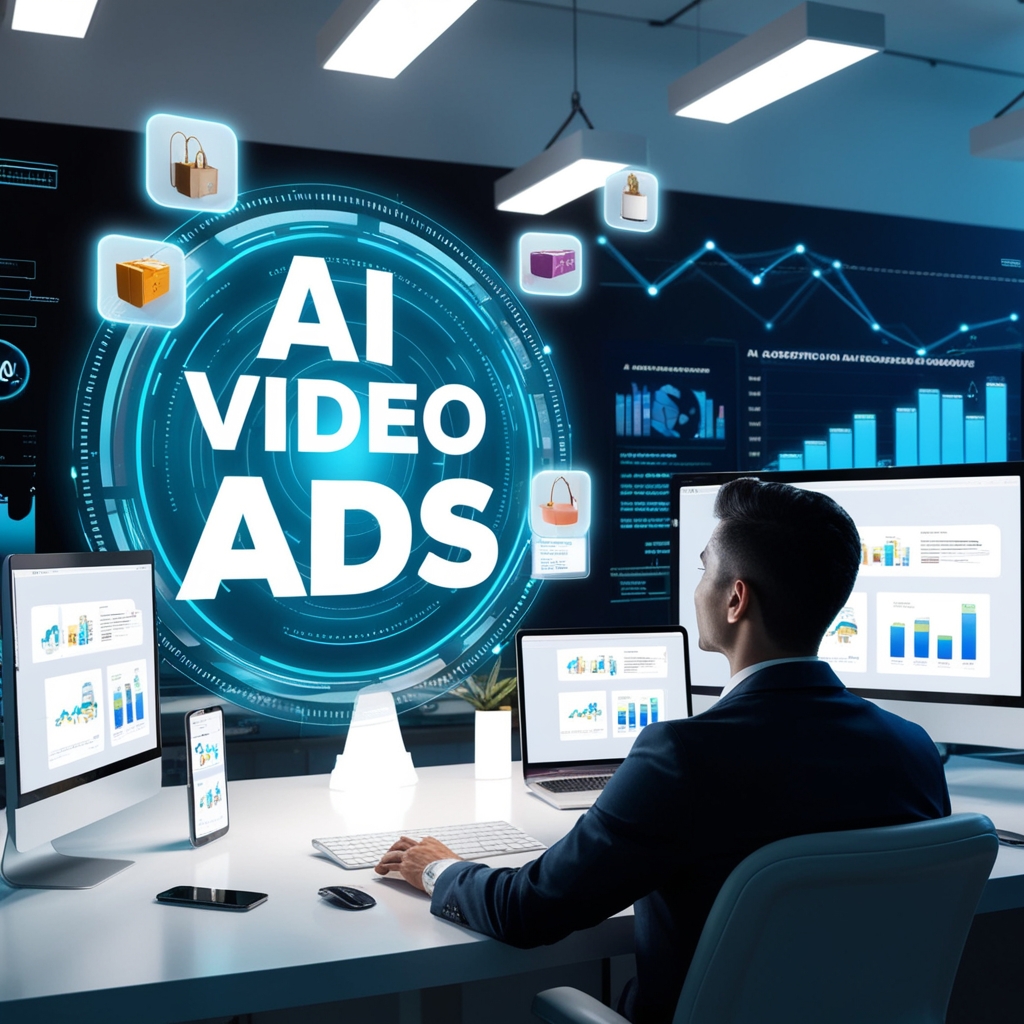




AI video ads for DTC brands are direct-to-consumer advertisements created with artificial intelligence supporting selected creative or production tasks. A finished video may use approved product photographs, real footage, animation, generated environments, virtual presenters, motion graphics, captions, voiceover, or AI-assisted editing.
The content may appear on social media, paid advertising placements, a product page, a launch page, a collection page, or a retargeting campaign.
AI is a production support tool rather than a replacement for marketing judgment. Every video still needs a defined audience, a campaign objective, accurate product information, a clear call to action, and a relevant destination page.
Why DTC brands use AI video advertising
Direct-to-consumer brands often manage product education, brand awareness, customer acquisition, launches, and retention through their own marketing channels. Video can help them communicate the product more clearly than a single photograph or a long paragraph.
AI video ads for DTC brands can help companies:
•Demonstrate how products work
•Explain a central product benefit
•Answer common customer questions
•Build interest before a launch
•Create social media and paid advertising versions
•Retarget visitors with a relevant message
•Test different hooks, formats, and calls to action
•Connect creative to product and collection pages
The goal is not to produce the largest number of clips. It is to create useful creative for each stage of the direct-to-consumer customer journey.
7 powerful strategies for AI video ads for DTC brands
1. Begin with the customer problem
A strong DTC advertisement often starts with a problem the audience recognizes. The problem may involve convenience, time, setup, product selection, organization, comfort, or uncertainty.
Write the problem in one sentence before developing the concept. A specific problem creates a more relevant opening than a general statement about the brand.
The product should then appear as a practical solution, followed by a demonstration or explanation of the main benefit.
2. Show the product in a real use case
DTC shoppers want to understand how an item fits into their routine. Show the product being opened, prepared, applied, assembled, used, cleaned, stored, or compared when those actions are relevant.
Use close-ups for important details and wider shots for context. Keep the product visible while the voiceover or captions explain what is happening.
For a demonstration-led approach, explore AI product demonstration videos.
3. Turn customer questions into creative ideas
Customer support messages, reviews, comments, direct messages, and product-page questions can provide practical topics for video ads.
Useful questions may include:
•How does the product work?
•What is included?
•Which option is right for me?
•How long does delivery take?
•How do I set it up or maintain it?
•What makes this version different?
•Is it suitable for my routine?
A question-led video can feel more useful than a generic promotional montage.
4. Create product-launch and offer sequences
A DTC brand may need several videos for a product launch. A teaser can build anticipation. A reveal can introduce the product and central benefit. A post-launch video can demonstrate use, answer questions, or retarget visitors.
Seasonal offers may also need different openings, benefits, and calls to action. Planning the sequence together helps the campaign remain consistent while giving each video a distinct purpose.
For launch-focused content, explore AI video ads for product launches.
5. Build trust with proof and process
Direct-to-consumer shoppers often want to understand what happens before they purchase. Process content can show preparation, packaging, craftsmanship, quality checks, or service steps.
Proof may also include an accurate demonstration, approved specification, transparent comparison, or clear explanation of what the customer receives.
Do not invent customer experiences or present generated reconstructions as real documentary footage. Trust improves when the advertisement represents the offer honestly.
For a process-led approach, explore AI process ads.
6. Adapt one concept for multiple channels
A DTC campaign may use social media, paid advertising, product pages, email, retargeting, and launch pages. One horizontal video may not work equally well in every placement.
Prepare suitable vertical, square, and horizontal versions. Review duration, captions, sound, safe areas, thumbnail frames, product visibility, and calls to action for each channel.
For mobile-first creative, explore AI short video ads for ecommerce brands.
7. Test one creative change at a time
Creative testing helps a DTC brand learn which messages and formats support its audience. Test one major difference at a time, such as the opening hook, product benefit, demonstration angle, presenter, duration, caption style, or call to action.
Keep the audience, placement, budget, and objective as consistent as possible. A video with more views is not automatically the best version if another produces more qualified clicks, add-to-cart actions, purchases, or enquiries.
For a structured testing approach, explore AI video ad testing.
How to plan AI video ads for DTC brands
Define the campaign goal
Decide whether the video is intended to build awareness, educate shoppers, support a launch, generate sign-ups, drive purchases, or retarget visitors.
The goal affects the audience, video structure, call to action, destination page, and metrics.
Identify the audience and buying stage
Describe the audience by need, product interest, situation, or buying stage. It might be a first-time visitor, returning product viewer, existing customer, or shopper comparing alternatives.
A specific audience helps determine the language, visual setting, proof, and central benefit.
Choose one main benefit
A short advertisement should not contain every product feature and brand message. Select the benefit most likely to matter to the target audience.
Support the benefit with a visible action, approved specification, realistic use case, or accurate comparison.
Prepare approved brand assets
Provide current product photographs, packaging references, logos, brand colors, specifications, approved claims, offer details, and existing footage. Clearly identify details that must remain exact.
Accurate references help prevent unwanted changes to product shape, labels, colors, materials, or proportions.
For a complete workflow, explore AI video ad production for ecommerce.
Write the script and storyboard
A practical structure is:
1.Relevant hook
2.Product introduction
3.Main benefit
4.Demonstration or proof
5.Clear call to action
For each spoken line or caption, decide what the viewer should see. The visual should support the message rather than distract from it.
For writing support, explore AI video ad scripts.
Choosing a creative format
Product demonstrations
Demonstrations show how an item works, how to use it, or how it fits into a routine. They are useful when a shopper needs practical information before buying.
UGC-style ads
UGC-style videos use a direct and conversational approach. They can explain a product in a familiar social format. Do not present an AI-generated presenter as a real customer unless that is accurate and authorized.
Spokesperson videos
A spokesperson can answer a question, introduce an offer, explain a feature, or guide viewers toward a product page. Use an authorized voice and likeness.
CGI and storytelling videos
CGI can create a distinctive environment, support a reveal, or illustrate a hard-to-film feature. Storytelling can place the product in a customer situation or routine.
Explore AI UGC ads, AI spokesperson ads, AI CGI ads, and AI storytelling ads for related formats.
Product accuracy and responsible advertising
AI-generated scenes can accidentally change important product details. Compare every final version with approved source materials.
Check:
•Product shape, size, color, and materials
•Packaging, labels, and logos
•Product functions and limitations
•Prices, discounts, and availability
•Shipping, returns, and booking details
•Health, safety, and performance claims
•Testimonials and customer permissions
•Presenter likeness and voice rights
•Music, footage, and visual licenses
•The relationship between the advertisement and product page
Do not create invented reviews, false customer experiences, or unsupported endorsements. Do not show a product achieving a result it cannot reliably deliver.
If a generated scene represents a concept or reconstruction rather than real footage, describe it accurately where appropriate.
Making DTC video ads work on mobile
Many viewers watch social and paid videos on a phone, often without sound. Use readable captions, strong contrast, clear product framing, and visual actions that remain understandable silently.
Keep important information inside the safe area and away from platform controls. Make the first frame understandable as a thumbnail and keep the call to action visible long enough to read.
Review each version on a real mobile screen. Text that looks readable on a desktop monitor may be too small in a feed.
Connecting the ad to the product page
The destination page should match the promise made in the video. If the advertisement demonstrates one product, link to the correct product or variation. If it promotes a collection, link to the relevant collection page.
Before launch, confirm that the page includes current information, accurate pricing, availability, relevant proof, mobile-friendly design, shipping details, returns information, and a visible next step.
A polished advertisement cannot repair a slow, unrelated, or confusing post-click experience.
Measuring DTC video campaign performance
Choose metrics that match the objective. Awareness may focus on reach, view rate, watch time, and completion. Consideration may include clicks, product-page visits, and engagement. Conversion may include add-to-cart activity, purchases, enquiries, and bookings.
Compare versions with similar audiences, placements, budgets, and objectives. A video with fewer views may still be more valuable if it creates more qualified actions.
Record the creative version, hook, benefit, format, audience, placement, and result. Use the information to improve future campaigns.
How Samin AI Marketing Hub supports DTC brands
Samin AI Marketing Hub creates AI-assisted video advertising content for ecommerce and direct-to-consumer brands. Creative options include product demonstrations, UGC-style ads, CGI campaigns, storytelling videos, process content, spokesperson videos, short-form advertisements, product launches, and creative testing variations.
A focused brief identifies the audience, objective, customer problem, central benefit, approved information, platform requirements, visual direction, and call to action.
Visit the Samin AI Marketing Hub Services page to explore the available support and view the portfolio for examples.
To discuss a DTC campaign, book a consultation with Samin AI Marketing Hub.
Final thoughts
AI video ads for DTC brands help direct-to-consumer companies turn product information into clear, adaptable, and useful advertising content. The strongest campaigns connect the audience, customer problem, product benefit, creative format, platform, product page, and objective.
Use AI to explore and adapt creative ideas, but keep human review, product accuracy, responsible claims, mobile readability, and customer relevance at the center of the process.
Frequently asked questions
What are AI video ads for DTC brands?
They are direct-to-consumer advertisements created with AI supporting tasks such as concepts, scripts, product demonstrations, captions, voiceover, editing, and platform variations.
Are AI video ads useful for DTC brands?
Yes. They can help DTC brands demonstrate products, answer customer questions, support launches, retarget visitors, and test different creative messages.
What assets are needed to create DTC video ads?
Useful materials include product images, packaging references, logos, brand guidelines, specifications, approved claims, offer details, existing footage, audience information, and the product-page URL.
How can a DTC brand keep AI advertisements accurate?
Use approved source materials and review every final scene for product details, packaging, functions, claims, pricing, availability, permissions, captions, and product-page consistency.
Do AI video ads guarantee more sales?
No. Results also depend on the offer, audience, targeting, budget, product page, pricing, checkout, customer experience, and testing process.