


Let’s be honest.
Most brow brands are not struggling because of bad products.
They’re struggling because of bad positioning.
And here’s the twist…
Customers don’t just buy a brow pencil.
They buy a complete brow transformation.
But if your marketing only pushes one SKU at a time?
You’re leaving money on the table.
So instead of discounting…
Instead of blaming ad fatigue…
Instead of assuming the algorithm is broken…
Let’s talk about something smarter:
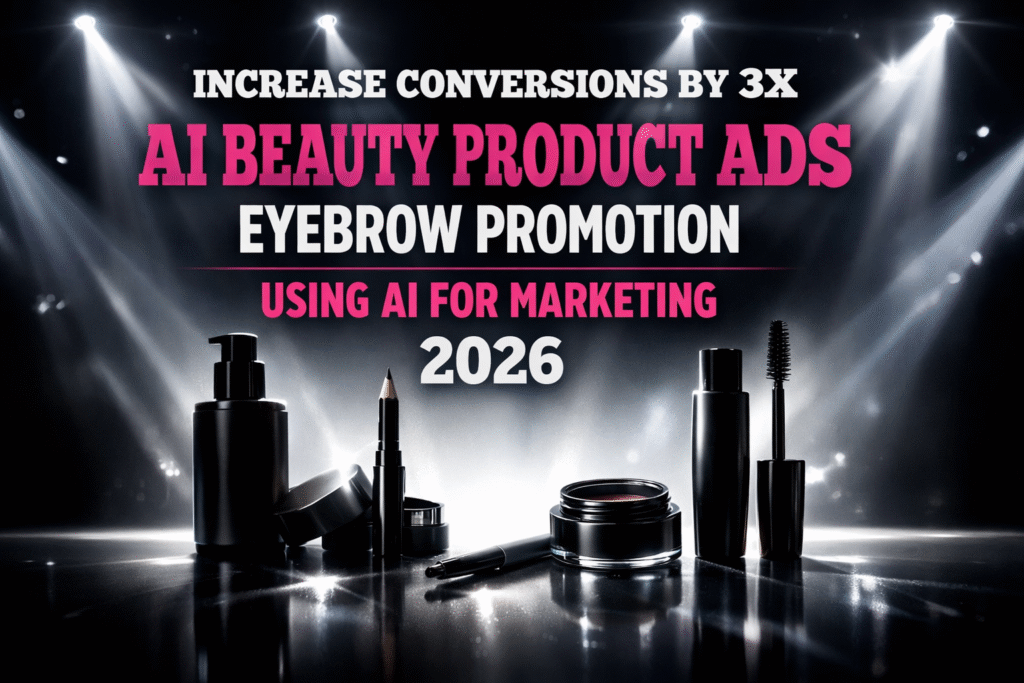
AI BEAUTY PRODUCT ADS designed around storytelling, routine stacking, and psychology-driven eyebrow promotion.
And that’s exactly what we’re breaking down today.
Picture this.
A dramatic reality show stage.
The host announces:
“Who gives the best brows?”
The Brow Pencil steps forward:
“I shape the story.”
The Pomade smirks:
“I bring the drama.”
The Gel adjusts confidently:
“I lock it in place.”
The Highlighter glows:
“And I lift the whole look.”
Suddenly…
It’s not four products.
It’s a team.
And that’s the magic of AI BEAUTY PRODUCT ADS.
They don’t sell items.
They sell systems.
Here’s what’s happening in beauty marketing:
Attention spans are shorter
CPCs are higher
Organic reach is inconsistent
Consumers expect education
But AI for marketing solves this.
Instead of guessing…
You generate multiple story-driven variations.
Instead of static product photos…
You create dynamic narrative hooks.
Instead of single-product messaging…
You build layered routines.
That’s how eyebrow promotion becomes profitable.
Let’s break it down.
Customers rarely know they need four products.
But they do want:
Long-lasting brows
Sculpted shape
Natural finish
Lifted appearance
When you frame each product as a role in a transformation?
You create perceived necessity.
That’s what AI BEAUTY PRODUCT ADS automate beautifully.
They script:
Conflict
Collaboration
Education
Resolution
And resolution equals checkout.
Educational Power: Turning Ads into Tutorials
Now here’s where most brands fail.
They advertise.
They don’t educate.
But your Brow Reality Show teaches:
Outline
Fill
Set
Highlight
That micro-education increases:
Watch time
Trust
Purchase confidence
And when using AI for marketing, you can instantly test:
Dramatic version
Humorous version
Expert version
Founder-led version
More testing = better performance.
| Factor | Traditional Beauty Ads | AI Beauty Product Ads |
|---|---|---|
| Focus | Single product | Full brow system |
| Hook | Discount-driven | Story-driven |
| Creative Speed | Slow | Rapid AI generation |
| Basket Size | Low | Higher |
| Testing | Limited | Scalable variations |
| Engagement | Passive viewing | Emotional engagement |
See the difference?
One pushes product.
The other builds experience.
Here’s the winning formula:
1. The Hook
Call out brow founders or customers directly.
Example:
“Brow brands — want customers buying the full brow system?”
Hooks create relevance.
2. The Conflict
Each product claims importance.
Conflict drives curiosity.
Curiosity drives watch time.
3. The Education
Teach the order:
Outline
Fill
Set
Highlight
Micro-lessons = macro conversions.
4. The Resolution
“Brows are teamwork.”
Boom.
You’ve just positioned the bundle.
AI is powerful.
But careless AI use can hurt your brand.
Here’s what to watch:
1. Over-automation
Don’t let AI replace brand voice.
Refine outputs manually.
2. Unrealistic Claims
Avoid exaggerated promises.
Trust is currency.
3. Ignoring Brand Identity
AI for marketing should enhance, not dilute, your aesthetic.
4. Too Many Variations at Once
Test strategically, not chaotically.
1. Selling Brow Gel Alone Without Context
One of the biggest mistakes brands make in eyebrow promotion is marketing a single product — like brow gel — without explaining where it fits in the routine. Customers don’t wake up thinking, “I need brow gel.” They wake up thinking, “I want better brows.” When you run AI BEAUTY PRODUCT ADS that isolate one SKU without showing how it works with pencil, pomade, or highlighter, you reduce perceived necessity.
Using AI for marketing allows you to frame gel as the “locking mechanism” in a layered brow system. Without that storytelling context, customers see it as optional. With context, it becomes essential.
2. Relying Only on Static Before-and-After Images
Before-and-after images used to work. Now? They’re expected.
Consumers scroll past static transformations because they’ve seen thousands of them. The problem isn’t proof — it’s presentation. AI BEAUTY PRODUCT ADS allow you to turn transformation into narrative. Instead of just showing the result, show the process: outline, fill, set, highlight.
Using AI for marketing, you can animate that progression in short storytelling ads. This keeps viewers engaged longer, builds trust through education, and positions your eyebrow promotion as professional rather than promotional.
3. Leading With Discounts Instead of Education
Discount-first advertising trains customers to wait for sales. It erodes perceived value and weakens your brand authority. When eyebrow promotion is centered around price cuts, customers see your products as interchangeable commodities.
AI BEAUTY PRODUCT ADS flip this model. Instead of saying “20% off brow pencil,” you show why the full brow system matters. Education increases perceived value. And when customers understand why they need multiple products, they are less price-sensitive.
Using AI for marketing helps you rapidly test educational hooks that convert without slashing margins.
4. Ignoring Application Order in Messaging
Many brands list product features but fail to explain usage order. This creates confusion. Customers may buy a pomade but not understand when or how to use it within a brow routine.
The result? Poor results. Dissatisfied customers. Lower repeat purchases.
AI BEAUTY PRODUCT ADS allow you to clearly structure messaging around sequence: Outline → Fill → Set → Highlight. When eyebrow promotion teaches order, it reduces misuse and increases satisfaction. That satisfaction fuels repeat sales.
5. Copying Competitor Ads Instead of Building a System
In saturated beauty markets, copying trends feels safe. But safe is forgettable.
When brands replicate competitor creatives without strategic differentiation, they blend into the feed. Using AI for marketing isn’t about copying templates — it’s about generating unique story-driven frameworks that reflect your brand voice.
AI BEAUTY PRODUCT ADS should build a recognizable system identity. When customers see your eyebrow promotion, they should immediately associate it with your unique routine philosophy.
Now let’s talk growth.
Because avoiding mistakes isn’t enough.
You need leverage.
1. Generate 10 Hooks Per Campaign Using AI for Marketing
Hook fatigue is real. The first three seconds of your AI BEAUTY PRODUCT ADS determine whether viewers stop or scroll.
Instead of relying on one headline, use AI for marketing to generate multiple emotionally distinct hooks:
Authority-driven
Humor-driven
Problem-solution
Founder-led
Tutorial-focused
Testing multiple hooks increases the probability of finding a winner. For eyebrow promotion, even small variations in opening lines can dramatically impact click-through rates.
The brands scaling fastest in 2026 are not guessing — they’re testing systematically.
2. Segment Your Audience and Personalize the Message
Not all brow buyers are the same.
Beginners need education.
Makeup artists want performance.
Busy professionals want speed.
Brides want longevity.
Using AI for marketing, you can tailor AI BEAUTY PRODUCT ADS to each segment without doubling production costs. Personalized eyebrow promotion feels more relevant, which increases engagement and conversion rates.
When customers feel understood, they buy with confidence.
3. Turn Each Product Into a Character With a Defined Role
One of the strongest storytelling strategies is role-based marketing.
Instead of describing features, assign identities:
Pencil = Architect
Pomade = Intensifier
Gel = Protector
Highlighter = Enhancer
AI BEAUTY PRODUCT ADS become more memorable when products interact like a team. This creates narrative cohesion and emotional engagement. It also naturally promotes multi-product purchasing during eyebrow promotion.
People remember characters more than ingredients.
4. Retarget With Educational Reinforcement
Most brands retarget with urgency.
“Still thinking?”
“Last chance!”
Instead, retarget with value.
Using AI for marketing, create retargeting ads that reinforce routine steps or clarify benefits. For example, if someone watched a brow pencil ad, follow up with content explaining why setting gel increases longevity.
This method positions your brand as helpful rather than pushy. AI BEAUTY PRODUCT ADS that educate in retargeting outperform pressure-based messaging long term.
5. Create a “System Name” for Your Brow Routine
Systems sell better than collections.
Instead of promoting individual SKUs, name your eyebrow promotion framework. For example:
“The 4-Step Brow Authority System”
When using AI for marketing, repeat that system name across creatives. Consistency builds recognition. Recognition builds trust.
Trust builds revenue.
6. Bundle With Purpose, Not Just Convenience
Bundles shouldn’t feel random.
They should feel necessary.
AI BEAUTY PRODUCT ADS allow you to visually demonstrate how each product contributes to the final look. When customers see the transformation sequence, the bundle feels logical.
Purpose-driven bundles increase average order value without relying on aggressive discounts.
7. Use Data Feedback to Improve Creative Weekly
One major advantage of using AI for marketing is speed of iteration.
Track:
Hook retention
Click-through rate
Add-to-cart behavior
Conversion rate
Then refine.
AI BEAUTY PRODUCT ADS should evolve weekly based on real performance data. Brands that treat creative as a static asset fall behind.
Creative testing is not a campaign.
It’s a process.
Final Strategic Insight
Here’s the bottom line.
Eyebrow promotion fails when it feels transactional.
It scales when it feels transformational.
AI BEAUTY PRODUCT ADS are not just about automation — they’re about structure, storytelling, and strategic layering. When you combine education, personality, and system-based selling, customers don’t just buy one product.
They buy the routine.
And when they buy the routine?
They buy the brand.
Still wondering if AI is worth it?
Here’s why it dominates:
Faster creative production
Lower production costs
Smarter personalization
Scalable testing
Predictive insights
And in 2026?
Speed wins.
Single SKU vs Brow System Strategy
| Metric | Single SKU Focus | Brow System Strategy |
|---|---|---|
| Average Order Value | Low | Higher |
| Perceived Expertise | Moderate | High |
| Repeat Purchase | Limited | Strong |
| Upsell Opportunity | Minimal | Strong |
| Brand Authority | Average | Professional |
The data speaks.
Systems outperform singles.
Bonus Tip: Turn Your Products into Characters
Give them personalities.
Pencil = Precision
Pomade = Drama
Gel = Control
Highlighter = Glow
Characters create memory.
Memory creates brand recall.
Brand recall creates revenue.
Final Thoughts
Here’s the truth.
AI ADS are not a shortcut.
They’re a strategy.
When used correctly, they:
Increase basket size
Elevate brand authority
Improve conversion rates
Reduce reliance on discounts
Position your brand as professional
And eyebrow promotion becomes storytelling instead of selling.
Quick Summary
This blog explains how AI BEAUTY PRODUCT AD can transform simple eyebrow campaign into a powerful multi-product sales system without relying on discounts. By using AI for marketing, beauty brands can turn brow pencils, pomades, gels, and highlighters into a storytelling routine that educates customers, increases basket size, and builds long-term brand authority. Instead of selling single items, the strategy focuses on promoting a complete brow system through engaging, value-driven content that feels natural — not salesy — while still driving consistent revenue growth.
AI BEAUTY PRODUCT ADS increase conversions through storytelling
Eyebrow promotion works best when framed as a system
Using AI for marketing speeds up creative testing
Education improves trust and sales
Bundling outperforms single-product ads
Find quick answers to the most common questions about STOP Ruining your Eyebrow in 2026 and increase sales. Discover how this simple editing step can instantly make your content more engaging, professional, and ready to grab attention in 2026.
AI BEAUTY PRODUCT ADS are advertisements created or enhanced using artificial intelligence to improve targeting, storytelling, and performance. They allow beauty brands to test multiple creative variations quickly and personalize messaging for specific audiences. In eyebrow promotion, they help position products as part of a complete routine rather than isolated items.
Eyebrows promotion becomes more strategic when AI helps structure ads around routines like outline, fill, set, and highlight. This educational storytelling increases customer understanding and confidence in purchasing multiple products. As a result, brands often see higher basket sizes and better retention rates.
AI for marketing means leveraging tools that generate scripts, optimize creatives, test variations, and analyze performance data. It reduces production costs while increasing testing speed. Beauty brands can iterate campaigns faster and adapt to trends in real time.
Can AI beauty ads replace human creativity?
BEAUTY PRODUCT ADS enhance creativity but should not replace human strategy. Founders and marketers must refine messaging to maintain brand voice and authenticity. The best results come from combining AI efficiency with human storytelling instinct.
Why does storytelling increase brow product sales?
Storytelling frames products as part of a transformation rather than standalone items. When customers understand how products work together, they perceive greater value. This drives multi-product purchases and builds brand authority.
What are common mistakes in eyebrow campaigns?
Common mistakes include focusing only on discounts, ignoring education, and selling single products without context. Brands also fail when they don’t test variations or personalize messaging. BEAUTY PRODUCT ADS solve this by enabling structured testing and layered storytelling.
How can small brands afford AI for marketing?
Many AI marketing tools are subscription-based and cost far less than traditional production. Small brands can generate scripts, visuals, and ad variations without hiring large creative teams. This makes advanced marketing accessible and scalable.
Do AI ads improve ROI?
Yes, when structured properly. They increase watch time, improve engagement, and encourage higher basket values. Over time, these factors contribute to improved return on ad spend.
How often should brands test new AI beauty ads?
Brands should test continuously but strategically. Launch small batches of variations weekly and analyze performance before scaling. AI allows consistent iteration without overwhelming budgets.
What is the future of AI cosmetics product ads?
The future includes hyper-personalized storytelling, predictive product bundling, and AI-generated performance insights. Beauty brands that adopt AI for marketing early will have a strong competitive edge. Eyebrow promotion, in particular, will thrive with system-based selling strategies.