


You’ve seen them.
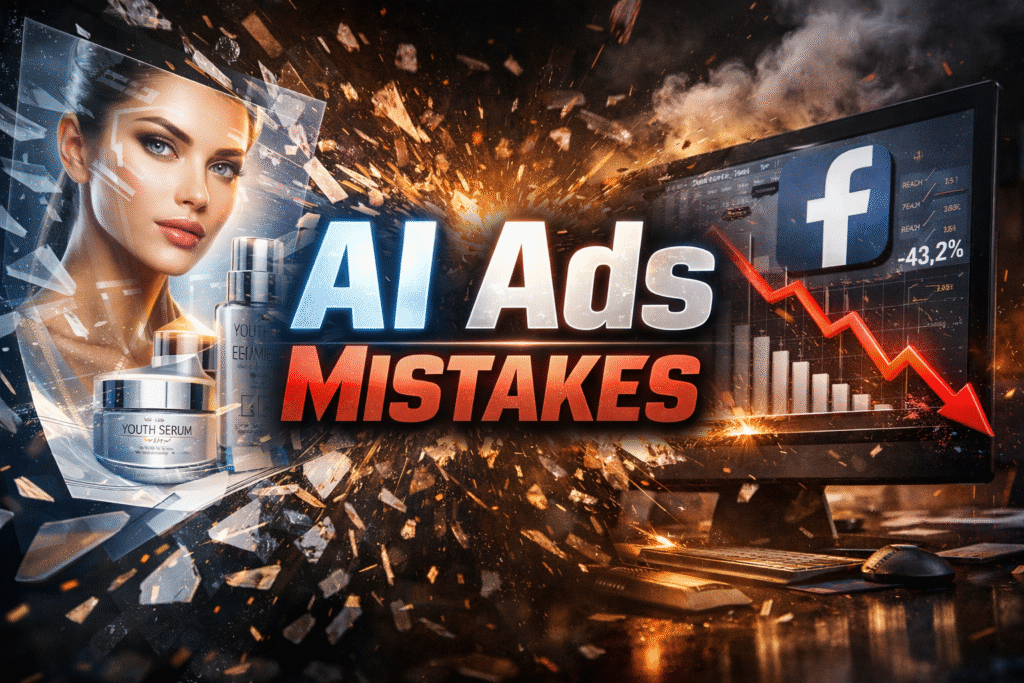
Beautiful, glossy ai video ads that look futuristic… but never convert.
You won’t believe this — AI did this, yet the ads still fail.
Why?
Because most skincare brands rush into AI ads without understanding Facebook’s ecosystem. Wrong messaging. Wrong visuals. Zero alignment with Facebook ads policies.
AI ads mistakes sabotage your Facebook ads results, especially for skincare and beauty brands chasing glowing skin conversions. Many brands pour budgets into AI video ads without fixing core flaws, leading to sky-high costs and zero sales. Picture this: your AI-generated video ad for anti-aging serum scrolls past unnoticed because it misses the mark on audience pain points.
Wait, There is more.
As an expert in AI ad creation for beauty brands, I see the same AI Ads mistakes again and again — mistakes that silently kill reach, spike CPMs, and stop conversions before they start.
Let’s break down the 9 biggest AI Ads mistakes killing Facebook performance — and how to fix them the right way.
Facebook rewards relevance, clarity, and trust. AI alone doesn’t guarantee any of those.
Brands don’t want you to see this, but Facebook’s algorithm doesn’t care how cool your ad looks. It cares whether your ai video ads:
Match audience intent
Communicate value instantly
Follow ad policies
Drive meaningful engagement
AI Ads changed real estate ads forever — but only for brands that understand strategy.
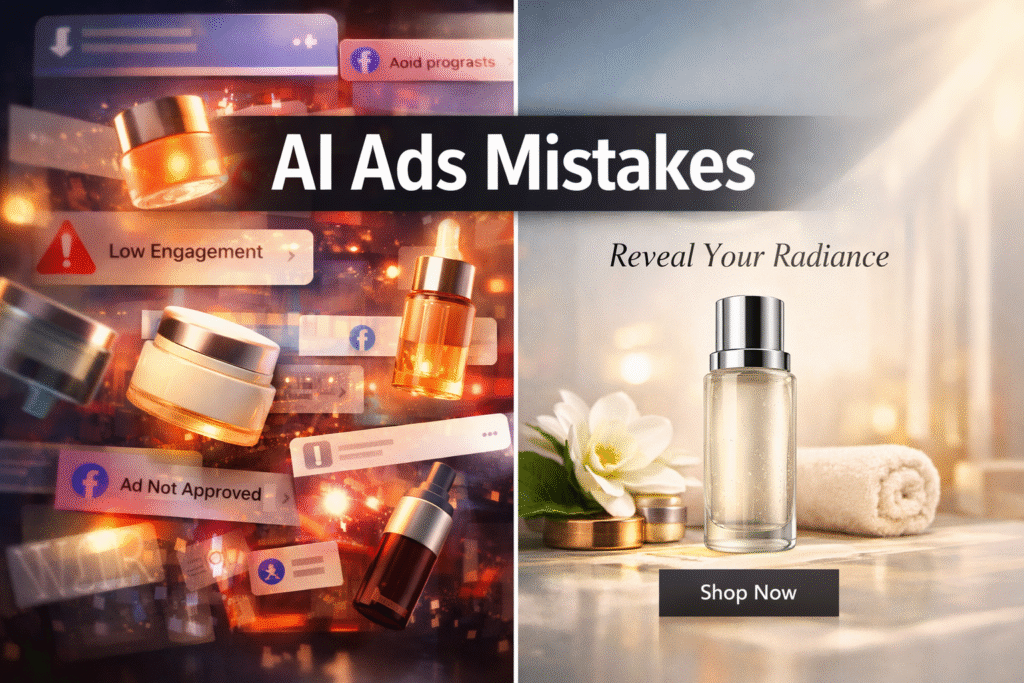
Many AI video ads fail because they prioritize visuals over meaning. Brands generate stunning AI creatives, but the ad doesn’t clearly communicate who the brand is, what problem it solves, or why the viewer should care. When messaging is vague, viewers may admire the design but fail to understand the value of the product.
This issue becomes even more damaging in skincare marketing, where trust and clarity matter deeply. Facebook users make split-second decisions, and if your AI ad doesn’t immediately convey relevance, the scroll continues. The algorithm interprets this low engagement as weak intent, reducing delivery quality.
Without precise prompts tying AI to your ethos, outputs clash with branding. For beauty brands, this means ads promising “miracle glow” but visuals screaming mass-market cheapness. Pro tip: always edit AI copy to infuse personality, boosting click-through rates by 25%.
Consequences:
Poor messaging leads to low click-through rates, higher CPMs, and weak conversion signals. Facebook deprioritizes ads that fail to generate clear engagement, causing performance to decline rapidly.
Solution:
Always build your message first. Define one audience pain point, one core benefit, and one brand promise before generating AI visuals. AI should enhance your story—not replace it.
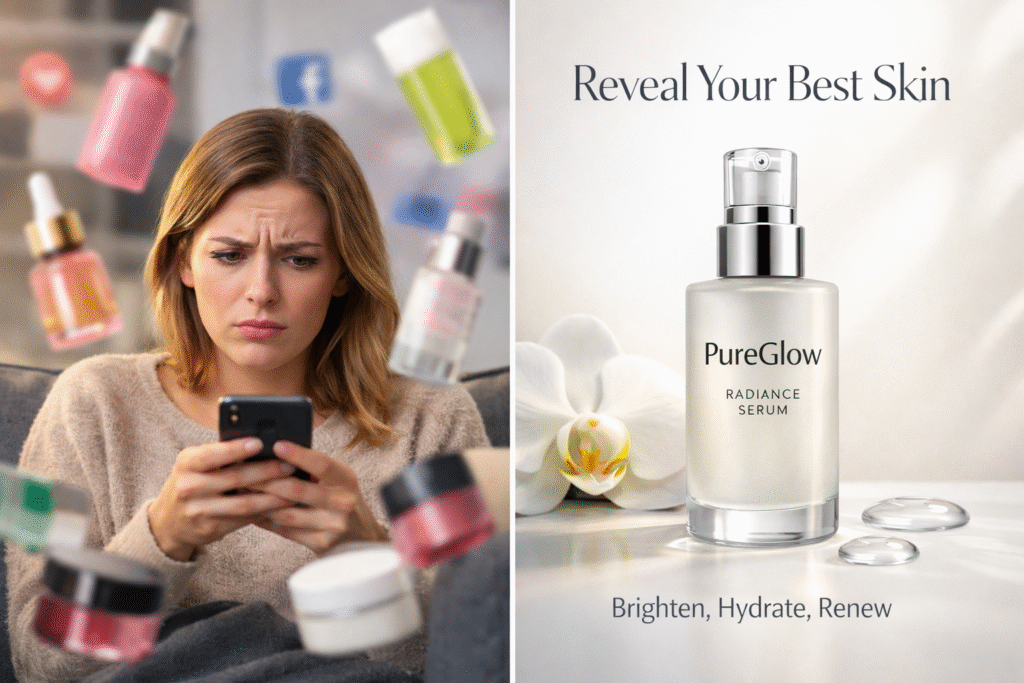
AI tools make experimentation easy, but that freedom often creates inconsistency. One ad may feel premium, another playful, and another overly futuristic. This visual inconsistency breaks brand recognition and weakens long-term performance, especially in competitive beauty niches.
For skincare brands, trust is built through repetition. When fonts, colors, tone, or visual style constantly change, audiences fail to form a mental association with your brand. Facebook’s algorithm also struggles to identify consistent brand signals, impacting optimization.
Brand consistency crumbles in AI video ads when tools generate visuals unrelated to your palette—think pastel serums turning neon disco. Facebook ads for beauty brands demand seamless alignment across feeds, stories, and reels, yet AI ignores hex codes and logos effortlessly. This error erodes recognition, dropping recall by 40%.
Without style guides fed into AI, your skincare line looks like a Frankenstein mix.
Consequences:
Inconsistent branding reduces recall, lowers trust, and weakens retargeting performance. Over time, this leads to declining ROAS and higher acquisition costs.
Solution:
Are you wondering how to fix it? Start with custom AI models trained on your assets. Create a fixed brand kit before launching AI ads. Lock in color palettes, tone, lighting style, logo placement, and messaging structure. Use the same brand inputs in every AI prompt.
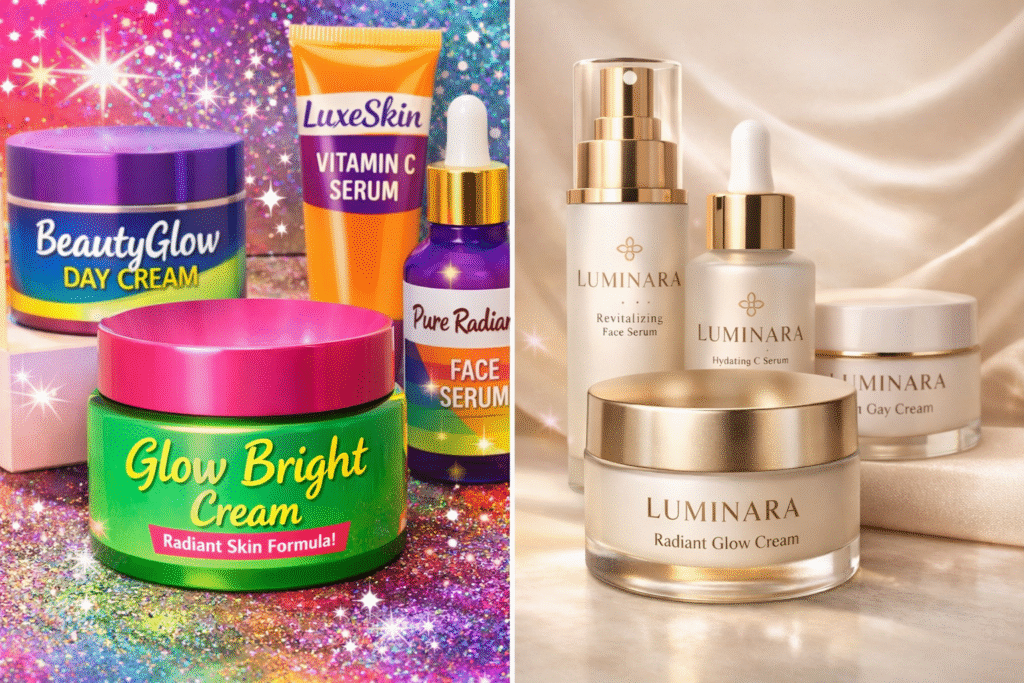
AI ads mistakes include unable to connect with audience, where generic avatars don’t mirror your 25-45 U.S. women battling acne scars. Facebook’s algorithm favors relevance, but AI defaults to stock models ignoring demographics, tanking relevance scores. Beauty brands see 3x higher drop-offs from this disconnect.
Many brands push AI visuals too far—overly perfect skin, exaggerated glow effects, or unrealistic product motion. While visually impressive, these ads often feel fake, especially to skincare audiences who value authenticity.
When viewers sense artificiality, skepticism rises. Instead of curiosity, the reaction becomes distrust. Facebook users may not consciously analyze why they dislike the ad—but they disengage, and the algorithm notices.
Consequences:
Unrealistic visuals lead to lower engagement rates, reduced trust, and weaker conversion intent. Ads may receive attention but fail to convert into customers.
Solution:
Use AI to enhance realism, not exaggerate it. Opt for natural lighting, subtle motion, and believable textures. The goal is credibility, not spectacle.
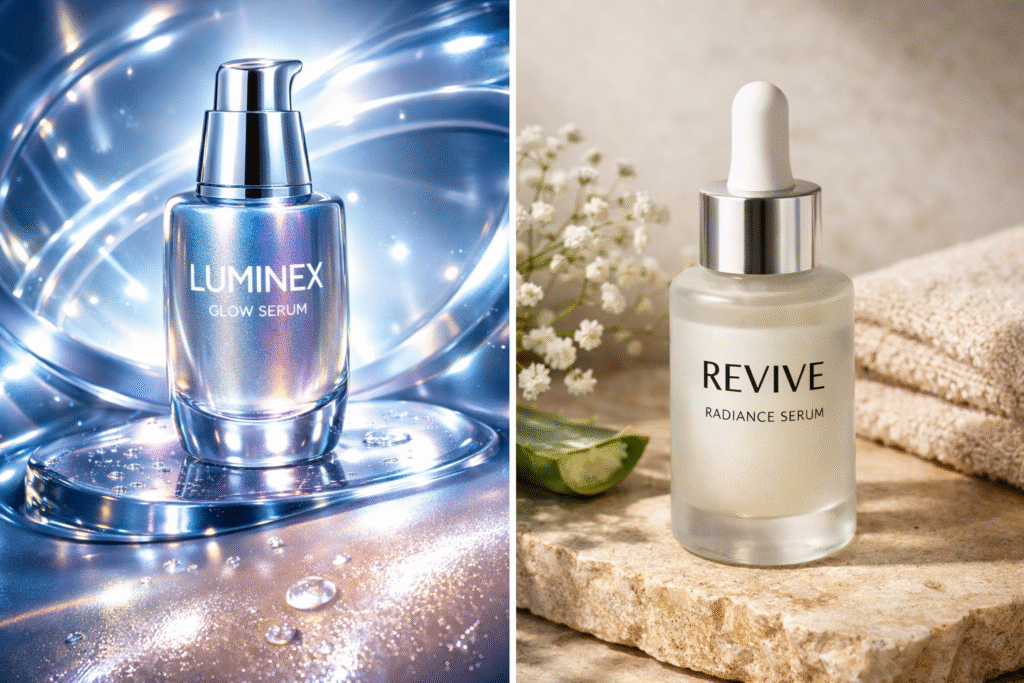
Unable to hit their pain point is a killer AI ads mistake for skincare Facebook ads—ads rave “smooth skin” without addressing “stubborn hormonal acne.” Research shows pain-led copy converts 2x better on Instagram. AI overlooks buyer journeys, focusing fluff over frustration.
Many AI ads focus on ingredients, formulas, or features while ignoring emotional pain points. In skincare, buyers are driven by insecurity, frustration, and personal transformation—not technical specs alone.
When AI ads skip emotional relevance, they feel generic. Viewers don’t feel seen or understood, which is critical for beauty brands competing in saturated markets.
Consequences:
Ads fail to resonate, leading to low engagement and weak conversion quality. Facebook optimizes away from ads that don’t trigger emotional interaction.
Solution:
Anchor every AI ad around one emotional pain point. Show empathy first, then introduce the product as the solution. Emotional clarity drives performance.
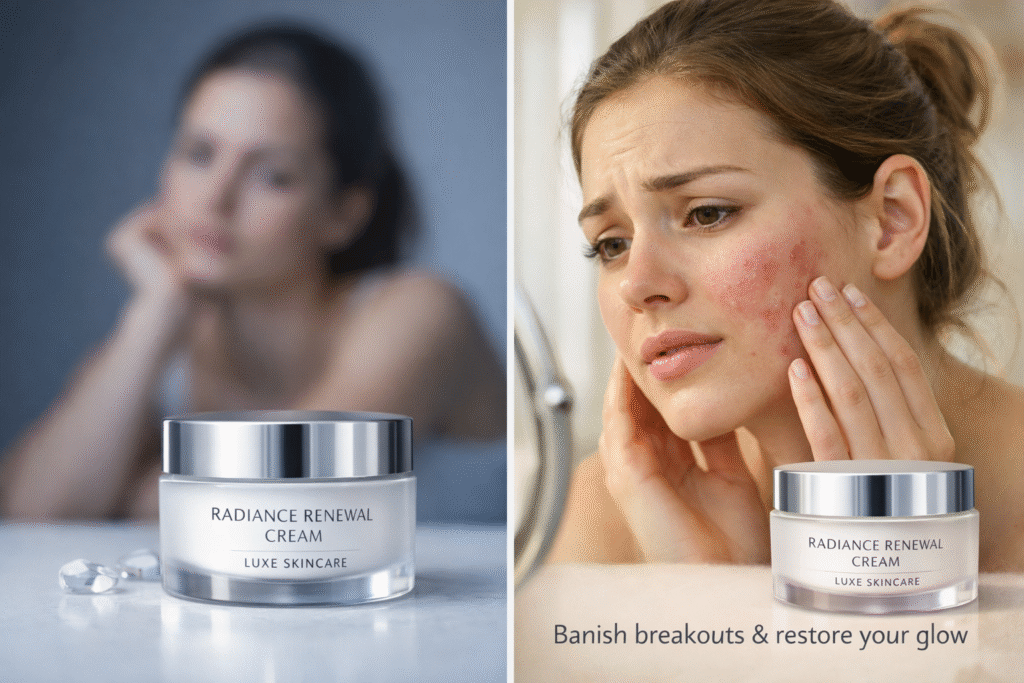
Many AI video ads end beautifully but without direction. Viewers are left unsure of what to do next, and Facebook lacks a clear optimization goal.
Lack of strong CTA plagues AI-generated Facebook ads, ending with vague “Learn more” instead of “Claim 50% Off Serum Now.” Beauty brands lose 60% of warm leads without urgency. AI dilutes action, assuming viewers self-motivate.
A strong CTA is not optional—it guides both the audience and the algorithm. Without it, even high-quality AI visuals underperform.
Consequences:
Low CTR, poor conversion rates, and inefficient ad spend. Facebook cannot optimize delivery without clear user intent signals.
Solution:
Use direct, benefit-driven CTAs such as “Shop Your Routine,” “Discover the Formula,” or “See Real Results.” Make the next step obvious.
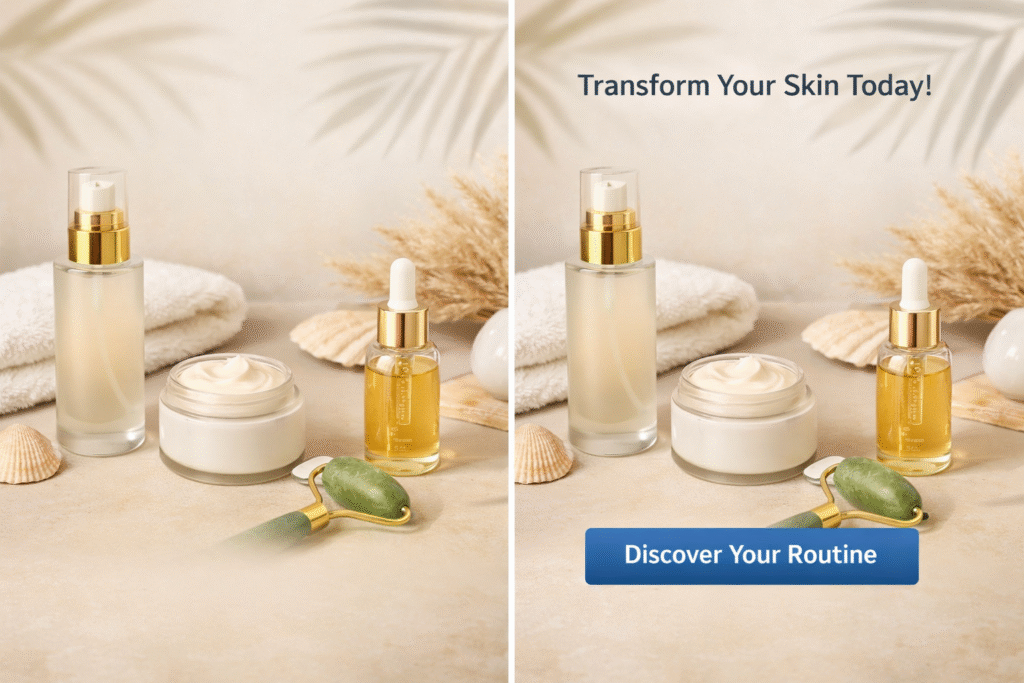
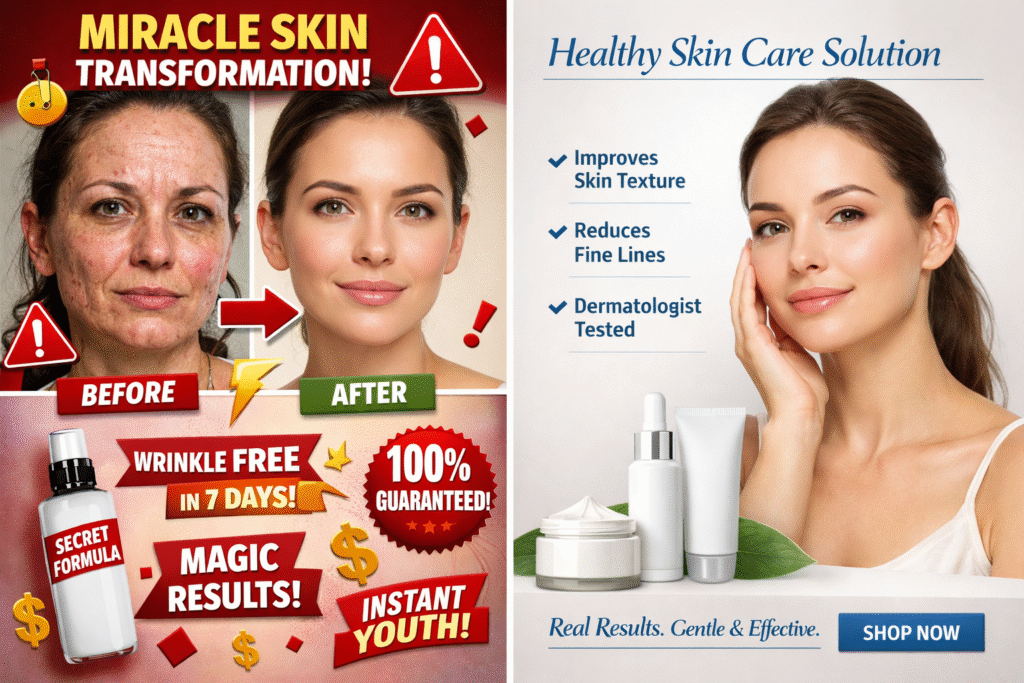
AI-generated ads sometimes imply unrealistic results, medical claims, or misleading transformations. These violations often happen unintentionally but can severely impact performance.
Facebook’s systems are highly sensitive to skincare claims. Even subtle policy violations can limit reach or stop delivery entirely.
Consequences:
Ad rejections, limited delivery, account warnings, and stalled scaling. Many AI ads never exit the learning phase due to compliance issues.
Solution:
Manually review every AI ad for policy compliance. Avoid exaggerated results, medical language, and before-and-after implications. Compliance enables scale.
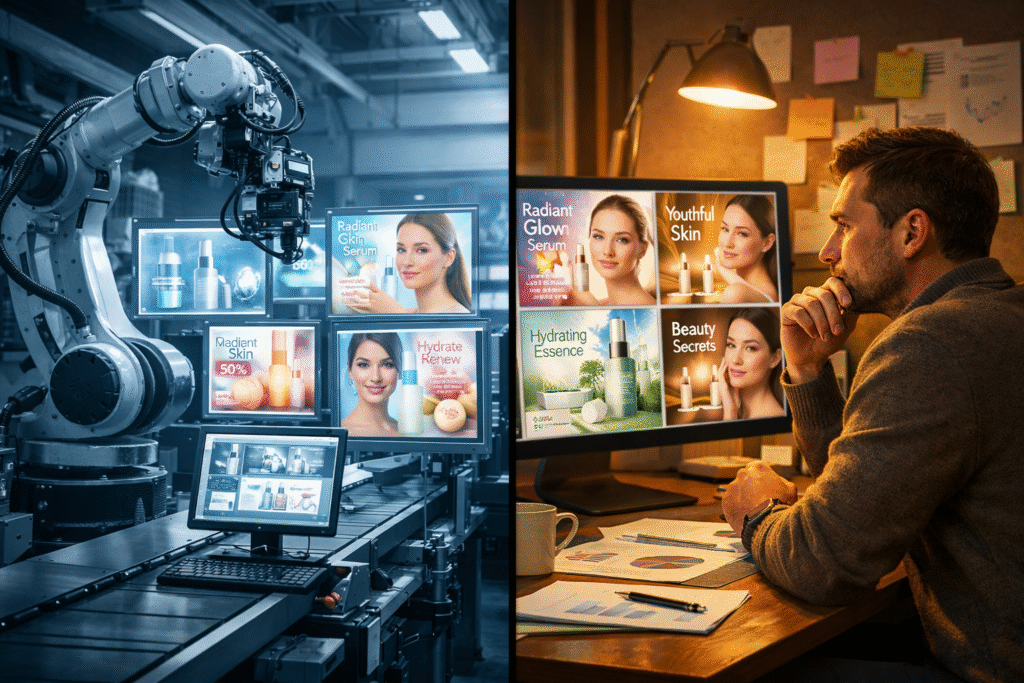
Some brands rely entirely on AI prompts without human oversight. While AI accelerates production, it cannot replace strategic thinking.
Without direction, AI outputs lack hierarchy, funnel logic, and emotional structure—resulting in visually appealing but ineffective ads.
Consequences:
High CPMs, low-quality traffic, and wasted ad spend. Facebook detects poor post-click behavior and reduces delivery.
Solution:
Use AI for execution, not decision-making. Humans should control messaging, funnel alignment, and performance optimization.
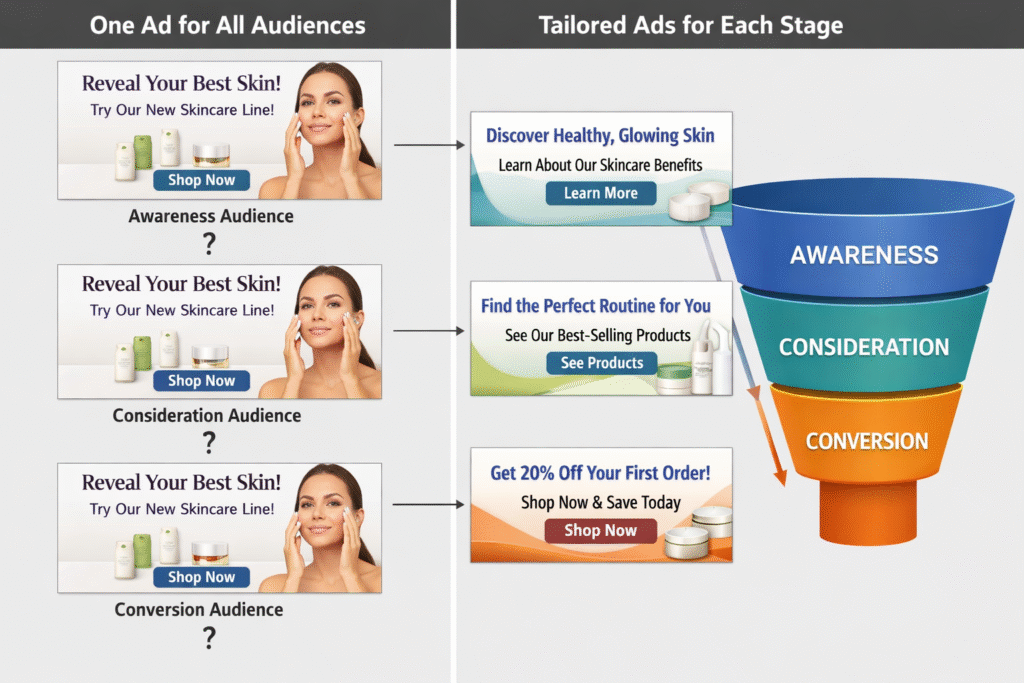
Running the same AI ad across awareness, retargeting, and conversion campaigns ignores buyer psychology. Each funnel stage requires a different message.
Facebook expects creative alignment with intent. When ads don’t match the user’s awareness level, performance suffers.
Consequences:
Lower relevance scores, reduced engagement, and inefficient retargeting performance.
Solution:
Create funnel-specific AI ads—educational for awareness, trust-building for consideration, and offer-driven for conversion.
AI makes it easy to launch many ads quickly, but excessive testing creates noisy data. Facebook struggles to optimize when signals are diluted.
More ads don’t equal better results—clarity does.
Consequences:
Slow optimization, inconsistent performance, and difficulty identifying winning creatives.
Solution:
Test fewer AI ads with clear variables. Allow Facebook to collect clean data before scaling.
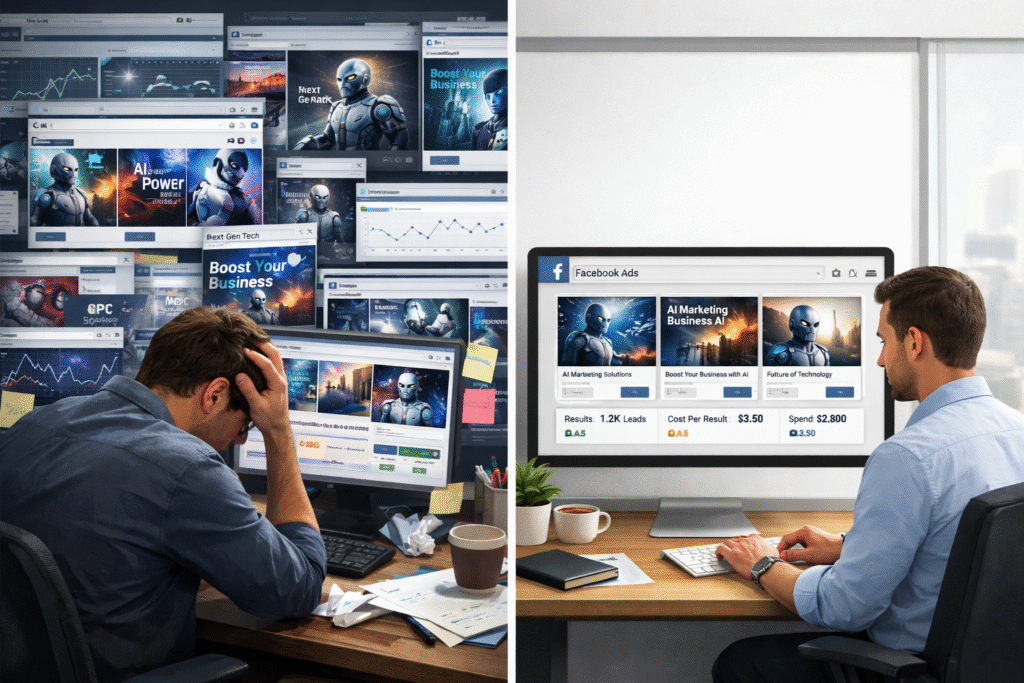
| Aspect | AI Ads (Common Mistakes) | Human-Optimized AI Ads | Impact on Skincare Brands ROAS |
|---|---|---|---|
| Engagement Rate | 1-2% (generic messaging) | 5-8% (pain-focused) | +300% |
| Policy Compliance | 40% rejection rate | 95% approval | Avoids 2-week bans |
| Conversion Cost | $15-25 CPA | $5-10 CPA | Doubles profit margins |
| Brand Recall | Low (inconsistent visuals) | High (consistent) | 2x repeat purchases |
| Video Hooks | <30% 3-sec view | >50% | Halves scroll-bys |
Precautions start with human review: scan every AI output for policy flags like exaggerated claims in skincare ads. Use verified prompts only—no untested templates risking bans. Test small budgets first ($50/day) to catch AI ads mistakes early.
Monitor pixel events; misfires kill optimization for Facebook ads. Backup with UGC hybrids: blend AI visuals with real testimonials. Dont worry if you dont have the budget—free tools like CapCut AI suffice with pro edits.
| Element | Poor AI Ads | High‑Performing AI Ads |
|---|
| Messaging | Unclear | Sharp & focused |
| Brand Consistency | Random | Locked & consistent |
| CTA | Weak | Clear & compelling |
| Compliance | Risky | Policy‑safe |
| Visual Style | Overloaded | Clean & intentional |
Pro tips: Feed AI your top-performing ads as examples for iterations. For AI video ads, enforce 9:16 vertical for Instagram Reels, boosting views 12%. Segment audiences—cold traffic gets hooks, warm gets CTAs.
AI generates visuals.
Humans generate trust.
The highest‑performing ai video ads combine AI speed with strategic thinking.
This is not all.
For budget-strapped beauty brands, leverage free AI like Runway ML for video prototypes, then polish in Canva. Prompt: “Realistic serum application on acne-prone skin, slow-mo glow reveal.” Test on Instagram Stories first—often 2x cheaper CPC than feeds. This is not all; track hook rates >30% or refresh. AI Ads Changed Real Estate ads Forever—now it’s skincare’s turn.
Mastering AI ads means blending tech with human insight for skincare Facebook ads that convert. Avoid these pitfalls, and watch beauty brands thrive on Meta. Ready to scale? Implement one tip today.
Most Facebook AI Ads fail due to unclear messaging, poor brand consistency, weak CTAs, and policy risks. Fixing these mistakes transforms AI video ads from experimental visuals into predictable revenue drivers.
Fix messaging, consistency, audience connection in AI ads.
Hit pain points, strong CTAs for higher skincare conversions.
Precautions: policy checks, small tests.
Pro tips: A/B tests, vertical videos.
At Samin AI Marketing Hub, we built our entire CGI advertising framework around one core insight: why AI ads are getting worse is not a technology issue—it’s a brand strategy failure. That’s why we don’t start with effects, prompts, or automation. We start with brand perception, buyer psychology, and conversion intent. Before a single frame is generated, we map your beauty brand’s positioning, price point, target audience, and emotional triggers. This ensures every AI ad we create reinforces trust, elevates perceived value, and supports sales—not just views.
We believe why AI ads are getting worse has nothing to do with AI tools—and everything to do with missing brand intelligence. Most ads fail because they start with effects instead of strategy. We reverse this completely.
Before creating any AI visuals, we define:
Brand positioning (luxury, masstige, indie, or clinical beauty)
Target buyer psychology and buying triggers
Price perception and value signaling
Platform-specific ad intent (paid ads vs organic virality)
Conversion goal (trust, education, or purchase)
This strategic foundation ensures every AI CGI ad supports brand perception first, not visual chaos. By anchoring creativity to intent, we eliminate the core problem behind why AI ads are getting worse and build ads that feel premium, intentional, and trustworthy to beauty consumers.
Once strategy is locked, we use AI as an enhancement layer—not a decision-maker. This is where most brands fail and why AI ads lose credibility. Our process is human-directed, conversion-focused, and realism-driven.
Our AI execution framework focuses on:
Studio-grade lighting to maintain luxury perception
Realistic material and texture simulation (glass, liquid, cream, shimmer)
Clear product hierarchy so the product remains the hero
Controlled motion that feels natural, not exaggerated
Camera angles designed to increase perceived product quality
Visual pacing aligned with beauty buying psychology
By blending AI speed with human creative control, we avoid the pitfalls that explain why AI ads are getting worse across the industry. The result is AI advertising that builds trust, supports sales, and protects long-term brand equity—especially for beauty brands targeting premium and U.S. markets.
At Samin AI Marketing Hub, we don’t chase viral visuals.
We build brand-safe AI ads that convert attention into revenue.
Ready to start creating viral, high-converting AI video ads for your brand? Join my AI Video Ads Mastery Course and learn how to create cinematic ads in minutes: no studio, no actors, no editing skills needed.
 Enroll now and transform the way you market in 2026.
Find quick answers to the most common questions about 9 AI Ads mistakes that affect FAcebook Ads Performance in 2026? And discover how this simple editing step can instantly make your content more engaging, professional, and ready to grab attention in 2026.
AI ads mistakes include unable to convey brand messaging and visuals mismatches, causing 48% budget waste for beauty brands.
AI video ads flop from unnatural animations and policy violations, dropping engagement on Facebook ads platforms.
Yes, dont worry if you dont have the budget—use free prompts and UGC blends for effective Facebook ads.
Why lack strong CTA in AI ads killing conversions?
Weak CTAs in AI ads lead to 60% lead loss; add urgency like “50% Off Now” for skincare Facebook ads.
How to ensure brand consistency in AI video ads?
Train AI with style guides; avoid this AI ads mistake for consistent beauty brands visuals.
What precautions for Facebook ads policies with AI?
Human-review all AI outputs; deepfakes ban fast on Meta for skincare ads.
Pro tips for AI ads targeting U.S. beauty audience?
Hit pain points like acne; use (You Won’t Believe This) hooks in AI video ads.
How do AI ads mistakes affect ROAS for skincare?
Generic AI ads hike CPA 2-3x; optimized ones cut it via pain-focused Facebook ads.
Best fixes for unable to connect with audience in AI ads?
Persona prompts: “Eco-mom with pigmentation”; boosts relevance in beauty brands campaigns.
Are AI video ads worth it for Facebook ads despite mistakes?
Absolutely—No Influencer Needed. Fix errors, and AI Ads Changed beauty marketing forever.