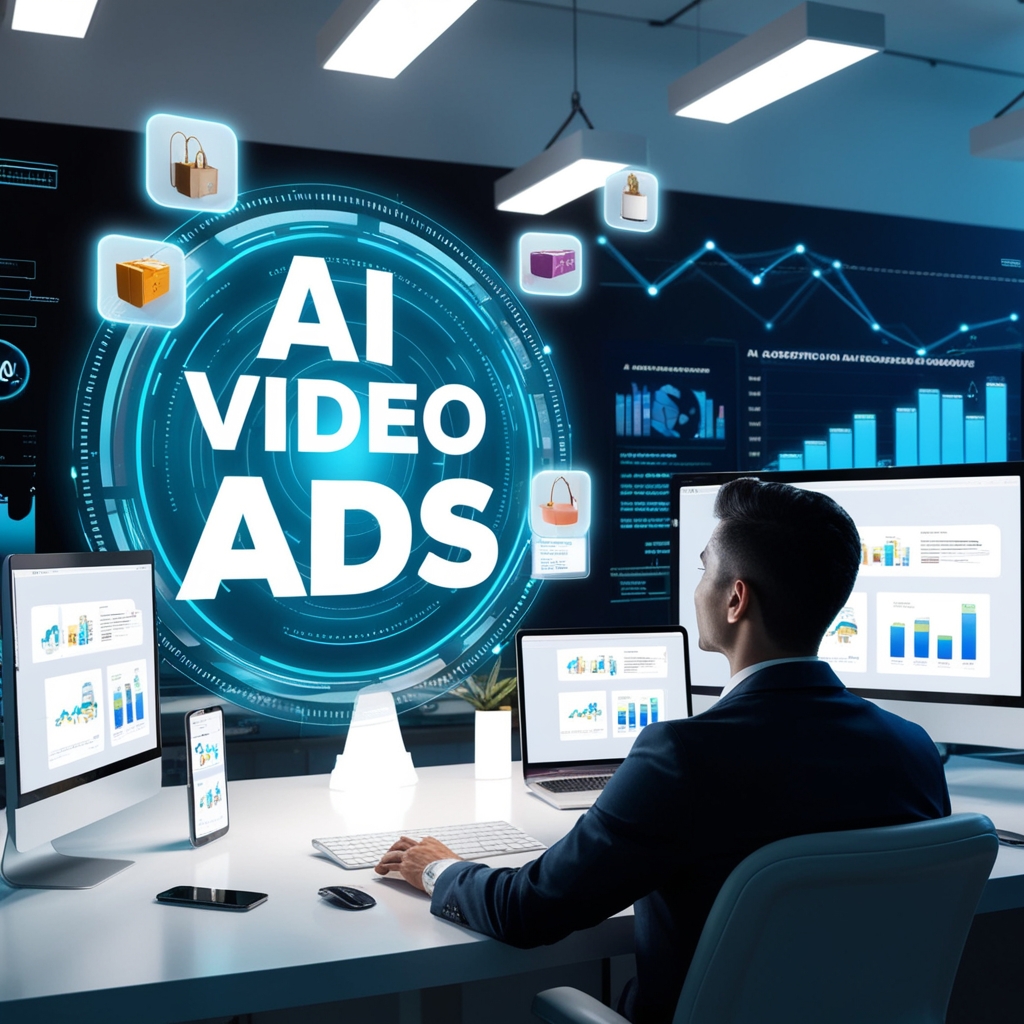




AI CGI ads for ecommerce are product advertisements that use computer-generated imagery and artificial intelligence to create cinematic scenes, visual effects, animations, or imaginative product demonstrations. They can show a product in a world that would be expensive, difficult, or impossible to film traditionally.
The strongest AI CGI advertisement is not created only to look impressive. It connects a memorable visual idea to a real customer, product benefit, and campaign objective. The product must remain recognizable, the claims must be accurate, and the final call to action must lead to a relevant destination page.
AI CGI can support product launches, social advertisements, paid campaigns, product-page visuals, brand films, seasonal offers, and retargeting creative. It works best when the creative concept makes the product easier to notice, understand, remember, or desire.
For a wider campaign plan, begin with Samin AI Marketing Hub’s AI video ad campaigns service before selecting the CGI concept.
What are AI CGI ads for ecommerce?
AI CGI ads for ecommerce combine product advertising with computer-generated environments, motion, effects, or animation. Artificial intelligence may support concept development, storyboards, image generation, video generation, compositing, editing, voiceover, captions, or creative variations.
The product may appear in a miniature world, futuristic environment, exploded view, transformation sequence, product reveal, simulated journey, or visual metaphor. The scene can be imaginative, but the advertisement still needs to make the offer clear.
A useful AI CGI ad should communicate:
•What the product is
•Who it is for
•What problem or desire it relates to
•Which benefit matters most
•What the viewer should do next
CGI should support the message rather than hide it. If the viewer remembers the visual effect but cannot identify the product or benefit, the advertisement has not done its job.
Why ecommerce brands use AI CGI advertising
Ecommerce brands compete for attention in crowded feeds and search results. A distinctive visual can help a product stand apart from repetitive product photographs and conventional advertisements.
AI CGI can help a brand create:
•Dramatic product reveals
•Cinematic launch videos
•Surreal product environments
•Miniature product worlds
•Animated ingredient or material stories
•Product transformations
•Visual comparisons
•Seasonal or themed campaign scenes
•Short-form social variations
The value is not simply visual novelty. A strong CGI concept can demonstrate scale, movement, texture, use, or product personality in a way that a static image cannot.
Shopify’s product video guidance emphasizes a clear hook, concise messaging, a solution to a customer pain point, valuable product information, and a call to action. Those principles also apply to cinematic CGI advertising. A spectacular scene still needs a clear reason for the viewer to care.
7 AI CGI ad concepts for ecommerce brands
1. Product reveal
Begin with an unusual environment, movement, or visual detail, then reveal the product as the central subject. This format works well for a launch, rebrand, seasonal campaign, or premium product.
The reveal should happen early enough that the viewer understands what the advertisement is about. Do not delay the product until the final frame unless the campaign is specifically designed as a teaser.
2. Miniature product world
Place the product in a tiny world where the product’s scale, shape, or function becomes visually memorable. A skincare product could appear in a botanical environment. A food product could become part of an imaginative landscape. A household product could be shown as a giant solution to a small everyday problem.
The miniature world should connect to the product benefit or brand personality. Decorative scenery without a meaningful product connection can distract from the offer.
For related visual storytelling, explore AI storytelling ads.
3. Material and texture transformation
Show a material, ingredient, texture, or surface moving through a visual transformation. This may help the viewer notice a product detail that is difficult to communicate in a standard product shot.
Use approved product information when describing materials or ingredients. A generated texture should not imply a property that the actual product does not have.
4. Product-in-use visualization
Use CGI to place the product in a difficult-to-film use case. The scene might show motion, scale, heat, water, time, or an environment that would be impractical for a traditional shoot.
Keep the use case realistic enough to support understanding. If the scene is illustrative, do not present it as proof of performance unless the claim is supported.
For demonstration-led creative, see AI product demonstration videos for ecommerce brands.
5. Ingredient or component journey
Show how an ingredient, component, material, or feature relates to the final product. This can make a technical benefit easier to understand.
The journey must reflect accurate product information. Do not invent sourcing, manufacturing, safety, or performance claims.
6. Product comparison visualization
Use animation or CGI to compare sizes, versions, configurations, features, or use cases. Keep the comparison factual and easy to follow.
A useful comparison helps the shopper choose. It should not make unsupported claims about a competitor or imply guaranteed superiority.
7. Social-first CGI hook
Create a short vertical concept designed for quick feed viewing. The opening may show an unusual transformation, a product close-up, a surprising scale change, or a direct question.
Keep the product visible and use concise captions. For a broader mobile-first approach, explore short video ads.
How to create AI CGI ads for ecommerce
Step 1: Define the campaign objective
Decide whether the CGI ad is intended to build awareness, launch a product, explain a benefit, drive sales, generate enquiries, or retarget visitors.
The objective affects the concept, length, product visibility, call to action, destination page, and success metric. A brand-awareness film may focus on memorability. A conversion ad should make the offer and next step clearer.
Step 2: Choose one audience and one product benefit
Start with a specific viewer and a single benefit. Avoid creating a beautiful scene before deciding what it needs to communicate.
A useful brief might say:
We are speaking to first-time shoppers who need to understand how this product fits into a daily routine.
Then select one benefit that can be shown visually. The benefit might be convenience, portability, ease of use, durability, appearance, organization, or a supported product feature.
Step 3: Prepare approved product references
Collect current product photographs, packaging images, logos, brand colors, dimensions, materials, ingredients where relevant, approved claims, product variants, pricing, offer terms, and existing footage.
Identify details that must remain exact, including:
•Product shape and proportions
•Label and packaging
•Colors and materials
•Ingredients or components
•Size and quantity
•Included accessories
•Product variants
•Pricing and offer terms
AI-generated scenes can accidentally alter these details. Compare the final video with approved references before publishing.
Step 4: Write the concept in one sentence
A strong CGI concept should be understandable in one sentence. For example:
A small product becomes the center of a miniature world that demonstrates its role in the customer’s daily routine.
If the concept needs a long explanation, simplify it before production. A simple concept is easier to adapt to a short ad, product-page video, or social variation.
Step 5: Build a visual storyboard
Plan the sequence before generating scenes. A practical structure is:
1.Hook or unusual visual.
2.Product appearance.
3.CGI environment or transformation.
4.Product benefit or use case.
5.Proof, detail, or offer.
6.Call to action.
For each scene, identify the product position, camera movement, lighting, action, caption, voiceover, and transition. This reduces inconsistent product appearances across generated shots.
Step 6: Create the first short version
Start with a concise version that communicates one idea. A short version is easier to review for product accuracy, message clarity, pacing, and visual consistency.
After the core version works, adapt it for product pages, social feeds, launch pages, email, and retargeting. Do not create many variations before confirming that the central concept is accurate and useful.
Step 7: Add captions and a clear CTA
Many viewers encounter short-form video while moving through a feed, and some may watch without sound. Use concise captions with high contrast and safe margins.
The call to action should match the campaign goal:
•Shop the product
•Explore the collection
•See how it works
•Compare the options
•Learn more
•Book a consultation
Send the viewer to the page promised by the ad. A cinematic product reveal should lead to the product, collection, or launch page that contains the relevant details.
Product accuracy and responsible CGI advertising
CGI is imaginative, but product advertising must remain honest. Do not use a generated visual to invent a customer review, product result, manufacturing process, ingredient source, certification, or performance claim.
Do not present an illustrative scene as documentary evidence. If the viewer could reasonably misunderstand what is real, clarify the presentation through the surrounding copy or creative treatment.
Do not use a person’s likeness, voice, or identity without authorization. Review every scene, caption, voiceover, product detail, price, and destination page before publishing.
Accuracy is especially important when the CGI scene is highly realistic. A realistic visual can still communicate an inaccurate product promise.
How to measure AI CGI ad performance
Choose the primary success metric before launch. For awareness, review qualified reach, completed views, attention, and meaningful engagement. For traffic, review qualified clicks and landing-page views. For ecommerce conversion, review add-to-cart actions, purchases, revenue, and return on ad spend where tracking supports those measures.
A visually impressive ad may produce attention without producing sales. Compare creative metrics with business results and record the concept, hook, audience, placement, offer, destination page, budget, and outcome.
Test one major creative variable at a time. You might compare a product-reveal hook with a product-in-use hook while keeping the audience, offer, and destination page consistent.
For a structured testing approach, explore AI video ad creative testing for ecommerce brands.
Internal links for this article
Use these internal links naturally:
•AI product demonstration videos
•AI video ad production services
Final publishing checklist
Before saving the post, confirm that:
•The focus keyword is entered exactly once in Rank Math.
•The keyword appears in the SEO title.
•The keyword appears in the slug.
•The keyword appears in the first paragraph.
•The keyword appears in one H2 heading.
•The keyword appears in the meta description.
•The keyword appears in the excerpt.
•The keyword appears in the featured-image alt text.
•The article has at least three internal links.
•The article has at least one external authority link.
•The featured image is attached.
•The article has short paragraphs and descriptive headings.
•Product claims and CGI scenes have been reviewed by a person.
•The destination page matches the offer in the ad.
Conclusion
AI CGI ads for ecommerce can help brands create memorable product reveals, imaginative demonstrations, cinematic launches, and social-first visual hooks. The strongest campaigns begin with a real customer, one product benefit, approved references, and a clear business objective.
Use CGI to make the message more understandable or memorable, not to hide an unclear offer. AI can support concepts, storyboards, scenes, voiceover, editing, and variations, but human review remains essential for product accuracy and responsible advertising.
If you need help creating cinematic product advertising, explore Samin AI Marketing Hub’s AI CGI ads service, AI video marketing services, and AI video ad production services. You can also view the portfolio or book a 30-minute consultation.