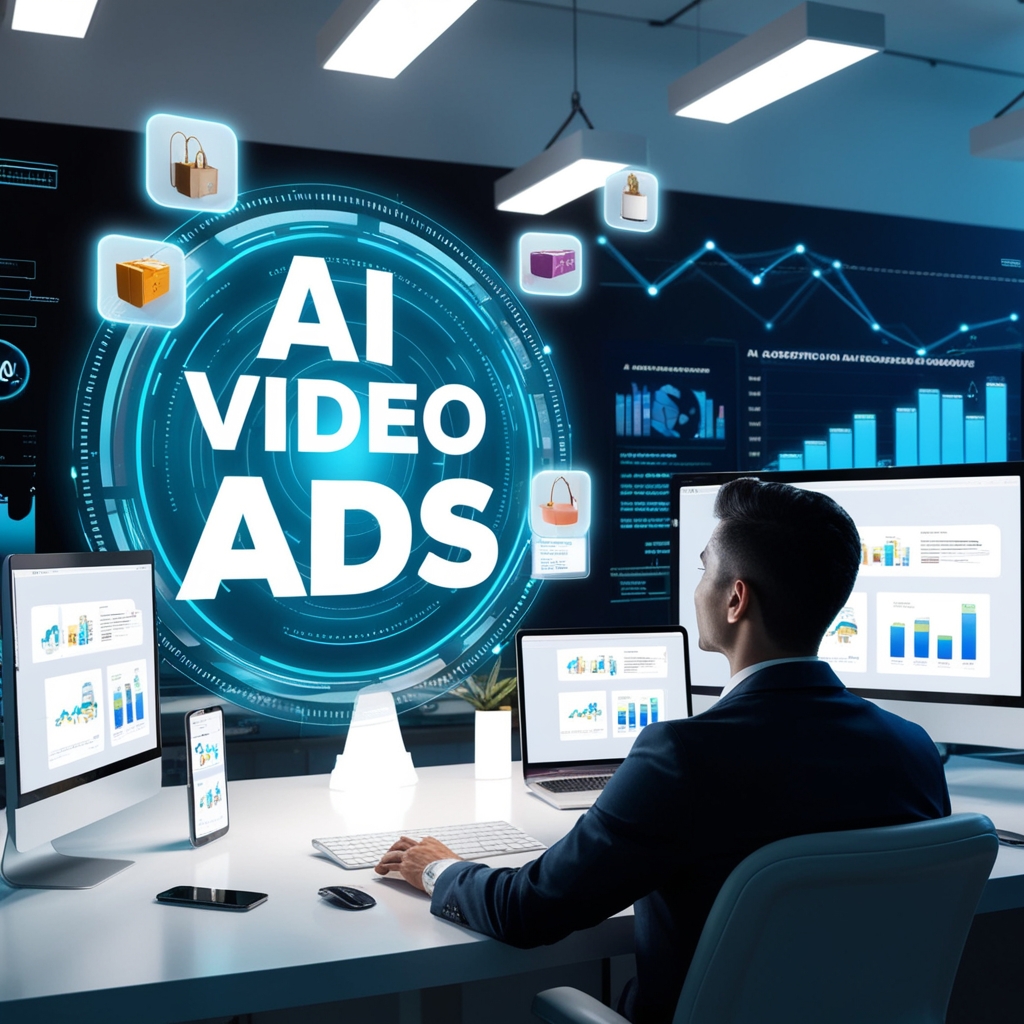




AI video marketing services are professional creative services that use artificial intelligence to support the planning and production of video marketing content. The work may include campaign strategy, concepts, scripts, storyboards, product visuals, UGC-style videos, CGI scenes, spokesperson content, storytelling, process videos, captions, editing, and platform adaptations.
A finished campaign may use approved product photography, real footage, animation, generated environments, virtual presenters, motion graphics, voiceover, and AI-assisted editing.
AI is a production resource rather than a replacement for marketing judgment. Every video still needs a defined audience, a relevant message, accurate product details, an appropriate call to action, and a landing page that supports the promise.
Why ecommerce brands use AI video marketing services
Ecommerce brands often need multiple types of content. New visitors may need a simple product introduction. Returning visitors may need a demonstration, comparison, or answer to a common question. Existing customers may need information about a new product, bundle, or seasonal offer.
AI video marketing services can help a brand:
•Turn product information into clear marketing messages
•Develop scripts and scene plans
•Show how a product works
•Create content for launches and promotions
•Adapt videos for several platforms
•Produce UGC-style, CGI, storytelling, process, and spokesperson videos
•Create variations for creative testing
•Connect videos to product, service, or collection pages
•Build a repeatable content workflow
The goal is not to create the most content. The goal is to create the most relevant content for the audience and objective.
7 powerful ways AI video marketing services support growth
1. Connect video content to a marketing objective
A strong campaign begins with a clear goal. The goal may be awareness, product education, sign-ups, purchases, bookings, enquiries, or retargeting.
The objective influences the audience, opening hook, benefit, video length, call to action, destination page, and metrics. A video intended to educate a new visitor should not use exactly the same structure as a video designed to recover an abandoned cart.
Write the objective in one sentence before developing the first concept. This keeps the production focused.
2. Turn product features into customer benefits
Product pages often contain specifications, materials, functions, and instructions. A marketing video should explain what those details mean for the customer.
A feature may support convenience, portability, durability, comfort, organization, easier setup, or a more suitable routine. Show the product action or use case that makes the benefit understandable.
Avoid listing every feature in one short video. Choose one central benefit and use separate creative versions for different messages.
For a demonstration-led approach, explore AI product demonstration videos.
3. Create content for different customer stages
Video content can support several stages of the customer journey.
Awareness
Introduce the product, service, or customer problem. Use a clear hook and make the subject understandable quickly.
Consideration
Explain how the product works, answer a question, show a comparison, or demonstrate a relevant feature.
Conversion
Highlight the main benefit, offer, proof, availability, or next step. Link to the correct product or enquiry page.
Retargeting
Remind previous visitors about the product, address an objection, or show a benefit they may not have understood during the first visit.
Planning these stages together creates a connected campaign instead of a group of unrelated videos.
4. Adapt one concept for several platforms
A video created for a horizontal placement may not work well in a vertical mobile feed. Captions, product details, faces, and calls to action can be cropped or hidden by platform controls.
Prepare suitable versions for vertical, square, and horizontal placements. Review duration, safe areas, captions, sound, thumbnail frames, and calls to action for each platform.
For mobile-first content, explore AI short video ads for ecommerce brands.
5. Use creative formats that match the message
A product demonstration is useful when the audience needs to see how an item works. UGC-style content can make a product explanation feel direct and conversational. A spokesperson can introduce an offer or answer a common question.
Storytelling can place a product in a customer situation. CGI can create a distinctive environment or illustrate a feature that is difficult to film. Process content can show preparation, packaging, craftsmanship, or quality checks.
Explore AI UGC ads, AI spokesperson ads, AI storytelling ads, AI CGI ads, and AI process ads when selecting a creative direction.
6. Produce stronger campaigns with creative testing
A campaign becomes more useful when the team learns which messages, formats, and openings work for the intended audience. Test one major creative difference at a time.
Possible variations include:
•Problem-led opening versus benefit-led opening
•Product demonstration versus spokesperson explanation
•Feature-focused message versus lifestyle context
•Caption-led version versus voiceover-led version
•Short version versus extended version
•Educational call to action versus direct sales call to action
Keep the audience, placement, budget, and objective as consistent as possible. For a structured approach, explore AI video ad testing.
7. Build a repeatable production workflow
A standard workflow can include a creative brief, approved product asset library, script template, storyboard, review checklist, revision stage, platform export plan, and performance record.
This makes future content easier to produce and helps the brand avoid repeating preventable mistakes. It also creates a record of which benefits, hooks, formats, and calls to action have already been tested.
For a complete production workflow, explore AI video ad production for ecommerce.
How to plan an AI video marketing campaign
Define the audience
Describe the audience by need, situation, product interest, or buying stage. A specific audience helps determine the language, visual setting, proof, and call to action.
Select the main problem
Choose one customer problem the product or service addresses. It may involve uncertainty, time, convenience, setup, comparison, organization, or understanding how a feature works.
Choose the central benefit
Translate a product feature into a practical customer benefit. Support the claim with a visible action, approved specification, realistic use case, or accurate comparison.
Write the script
A practical structure is:
1.Relevant hook
2.Product or service introduction
3.Main benefit
4.Demonstration or proof
5.Clear call to action
For script guidance, explore AI video ad scripts.
Plan the visuals
For every spoken line or caption, decide what the viewer should see. The visual should support the message rather than distract from it.
The scene plan should identify the product action, camera angle, captions, voiceover, music, duration, aspect ratio, and call to action.
Review the first version
Check the creative against the approved brief. Remove scenes that do not support the audience, problem, benefit, proof, or action.
Then prepare the versions needed for the campaign’s platforms and customer stages.
Product accuracy and responsible marketing
AI-generated scenes can accidentally change important product details. Compare each final version with approved source materials.
Check:
•Product shape, size, color, and materials
•Packaging, labels, and logos
•Product functions and limitations
•Prices, discounts, and availability
•Shipping, returns, and booking information
•Health, safety, and performance claims
•Testimonials and customer permissions
•Presenter likeness and voice rights
•Music, footage, and visual licenses
•The relationship between the video and landing page
Do not create invented reviews, false customer experiences, or unsupported endorsements. Do not show a product achieving a result it cannot reliably deliver.
If a generated scene represents a concept or reconstruction rather than real footage, describe it accurately where appropriate.
Making video marketing work on mobile
Many people view social and display videos on a phone, often without sound. Use readable captions, strong contrast, clear product framing, and visual actions that remain understandable silently.
Keep important information inside the safe area and away from platform controls. Make the first frame understandable as a thumbnail and keep the call to action visible long enough to read.
Review each version on a real mobile screen. Text that is readable on a desktop monitor may be too small in a feed.
Connecting videos to the landing page
The destination page should match the promise made in the video. A product advertisement should link to the correct product or variation. A service advertisement should link to a page that explains the offer and provides a clear enquiry or booking path.
Before launching, confirm that the page includes current information, accurate pricing, availability, relevant proof, mobile-friendly design, and a visible next step.
A polished video cannot repair a slow, unrelated, or confusing post-click experience.
How to measure AI video marketing services
Choose metrics that match the campaign objective. Awareness may be measured through reach, view rate, watch time, and completion. Consideration may include product-page visits, clicks, and engagement. Conversion may include enquiries, bookings, add-to-cart activity, and purchases.
Compare versions with similar audiences, placements, budgets, and objectives. A video with fewer views may still be more valuable if it produces more qualified visitors or actions.
Record the creative version, hook, benefit, format, audience, placement, and result. Use the information to improve the next campaign.
How Samin AI Marketing Hub supports ecommerce brands
Samin AI Marketing Hub provides AI-assisted video marketing support for ecommerce brands and growing businesses. Creative options include product demonstrations, UGC-style ads, CGI campaigns, storytelling videos, process content, spokesperson videos, short-form advertisements, product launches, and creative testing variations.
A focused brief identifies the audience, objective, customer problem, central benefit, approved information, platform requirements, visual direction, and call to action.
Visit the Samin AI Marketing Hub Services page to explore the available support and view the portfolio for examples.
To discuss a campaign, book a consultation with Samin AI Marketing Hub.
Final thoughts
AI video marketing services help ecommerce brands plan and create video content that supports awareness, education, launches, retargeting, and conversion. The strongest campaigns connect the audience, message, visual format, platform, landing page, and objective.
Use AI to explore and adapt creative ideas, but keep human review, product accuracy, responsible claims, mobile readability, and customer relevance at the center of the process.
Frequently asked questions
What are AI video marketing services?
They are professional services that use AI-supported workflows to help brands create video concepts, scripts, product demonstrations, UGC-style ads, CGI, storytelling, spokesperson content, captions, edits, and platform variations.
Are AI video marketing services useful for ecommerce?
Yes. They can help ecommerce brands explain products, support launches, answer customer questions, create retargeting content, and test different creative messages.
What does a brand need before production?
Useful materials include product images, packaging references, logos, brand guidelines, specifications, approved claims, offer details, existing footage, audience information, and the destination URL.
How can brands keep AI video marketing accurate?
Use approved source materials and review every final scene for product details, packaging, functions, claims, pricing, availability, permissions, captions, and landing-page consistency.
Do AI video marketing services guarantee sales?
No. Results also depend on the offer, audience, targeting, budget, landing page, pricing, checkout, customer experience, and testing process.