


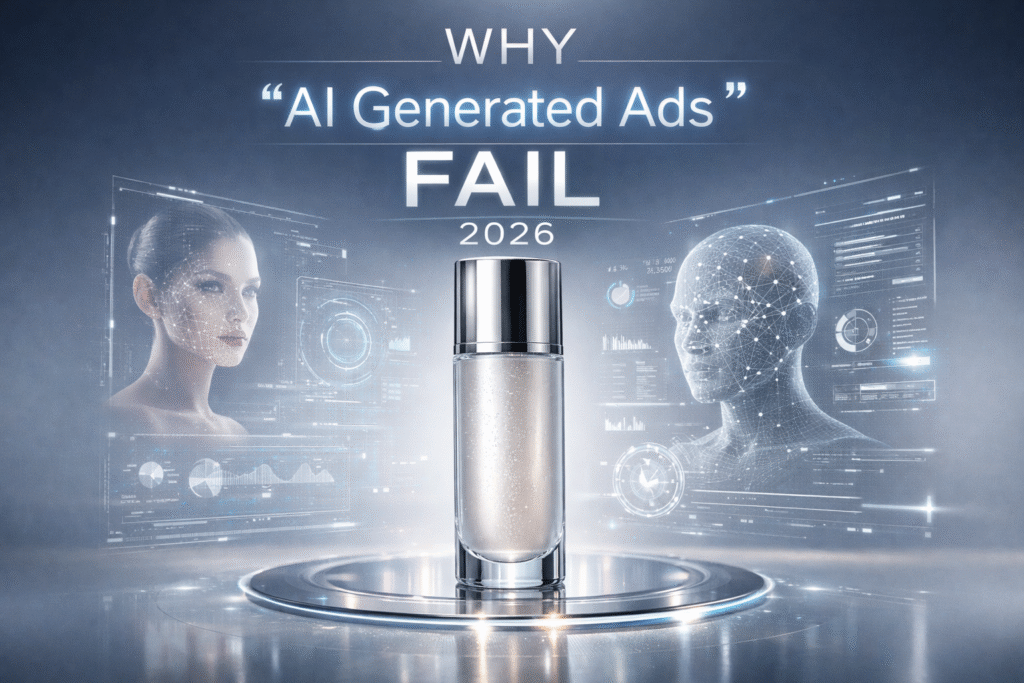
Surprising Fact: A single AI-generated ad launched without strategy can erode customer trust so deeply that nearly 1 in 2 beauty brands need months to rebuild credibility and ad performance afterward—and most never realize AI was the cause.
“AI Did This…”
“This Wasn’t Filmed by a Human.”
“No Influencer. Just AI.”
Sounds impressive, right?
Wait.
There is more — and this is where most beauty brands get burned.
In 2026, ai generated ads are no longer a novelty. They’re mainstream. Every skincare brand, cosmetic startup, and DTC beauty founder is experimenting with ai advertising because it feels faster, cheaper, and scalable.
But here’s the uncomfortable truth:
AI generated ads without strategy don’t just fail — they actively destroy beauty brand trust.
You won’t believe this, but many beauty brands are seeing higher CPMs, lower ROAS, and more ad rejections after switching to artificial intelligence ads without a clear plan.
And no — it’s not because AI doesn’t work.
It’s because strategy still matters more than tools.
This is not all.
Brands don’t want you to see this — but we’re going there.
Beauty is not real estate.
Beauty is not SaaS.
Beauty is not dropshipping.
Beauty is emotional, personal, visual, and trust-driven.
When ai generated ads ignore that reality, audiences feel it instantly. Especially in skincare, where people ask:
Will this damage my skin?
Is this brand honest?
Can I trust these claims?
AI advertising that looks impressive but lacks intention sends the wrong signal.
And once trust is broken?
It’s expensive to rebuild.
Let’s break down the 5 biggest reasons AI generated ads without strategy destroy beauty brand trust in 2026 — and what to do instead.
Here’s the first mistake most beauty brands make.
They let AI create visuals — but forget to define what the brand actually stands for.
AI doesn’t understand:
Clean beauty philosophy
Dermatologist-backed positioning
Inclusivity
Sustainability
Luxury vs clinical tone
So what happens?
The ads look polished… but hollow.
Consequences for Beauty Brands
Without clear messaging, ai generated ads feel generic. Viewers scroll past because:
They can’t tell who the brand is for
The message feels copied
The visuals don’t match the promise
Over time, this leads to:
Lower engagement rates
Reduced brand recall
Loss of emotional connection
And in beauty marketing, emotional connection is everything.
Solution: Feed Strategy Before Feeding Prompts
Before launching ai advertising, beauty brands must define:
Brand voice (clinical, luxurious, playful, bold)
Core values (clean, cruelty-free, results-driven)
One clear promise per ad
AI should execute strategy — not invent it.
Pro tip: Create a brand messaging document and use it as the base for every AI prompt.
Wait — this is where things get dangerous.
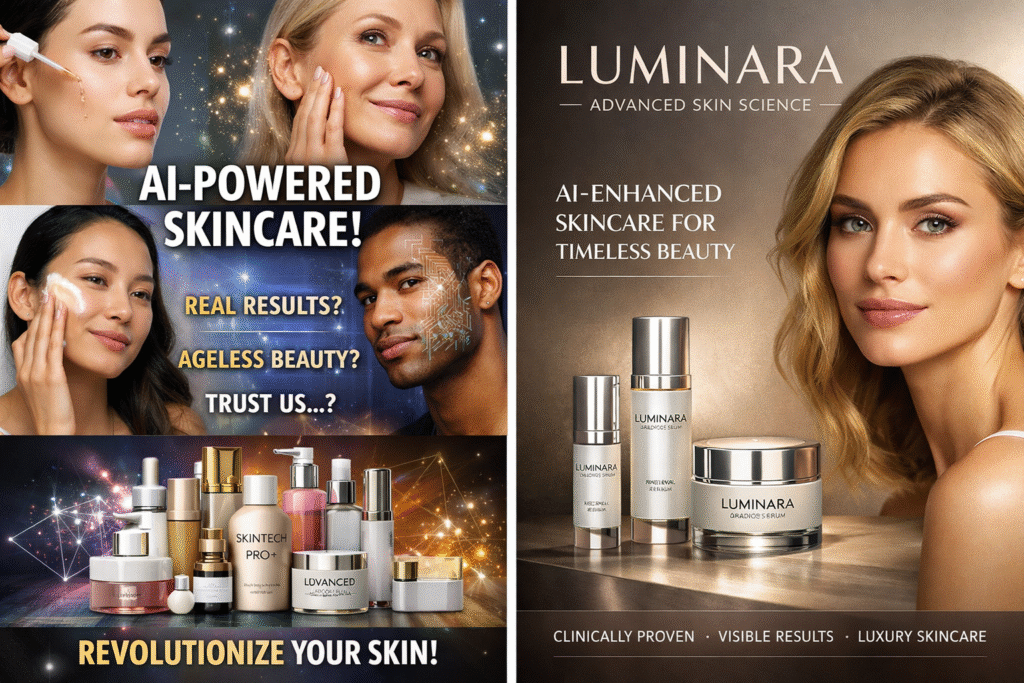
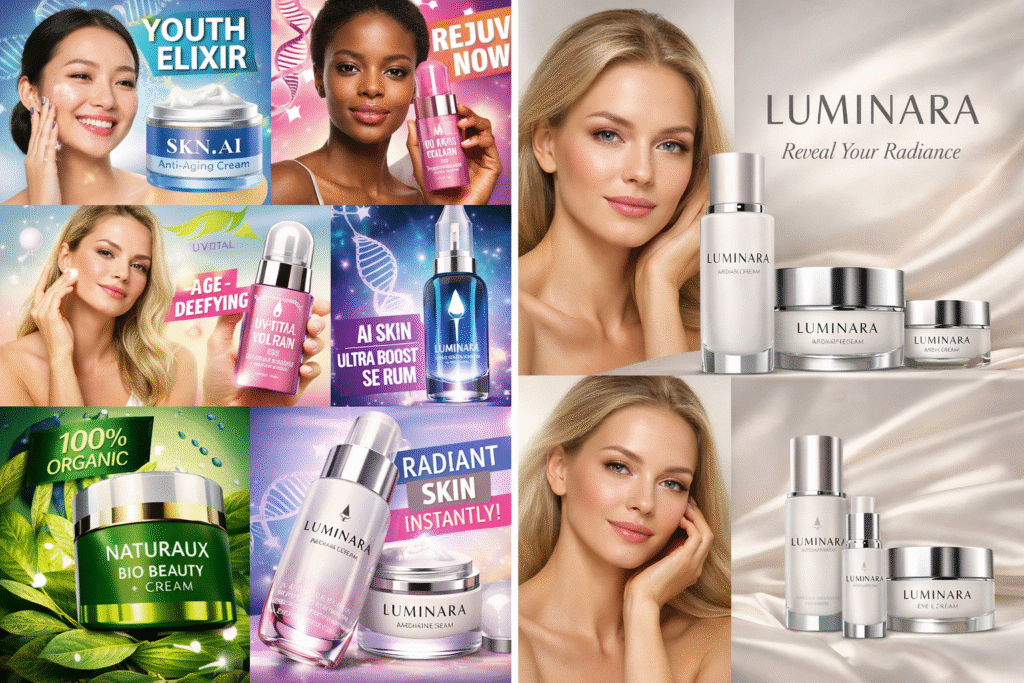
AI generated ads make it easy to create hundreds of variations.
But without strategy, beauty brands end up with:
Different models in every ad
Inconsistent skin tones and aesthetics
Random packaging colors
No visual continuity
Audiences notice — even subconsciously.
Consequences for Beauty Brands
When visual identity is inconsistent:
Ads look unprofessional
Brand recognition drops
Trust erodes
People start thinking:
“Is this even the same brand?”
And once that doubt appears, conversion dies.
Solution: Lock a Visual System Before Scaling AI Ads
Successful ai advertising for beauty brands requires:
Fixed color palettes
Consistent product angles
Repeating visual elements
Familiar ad formats
AI works best inside creative boundaries.
Here’s the truth brands don’t want you to see.
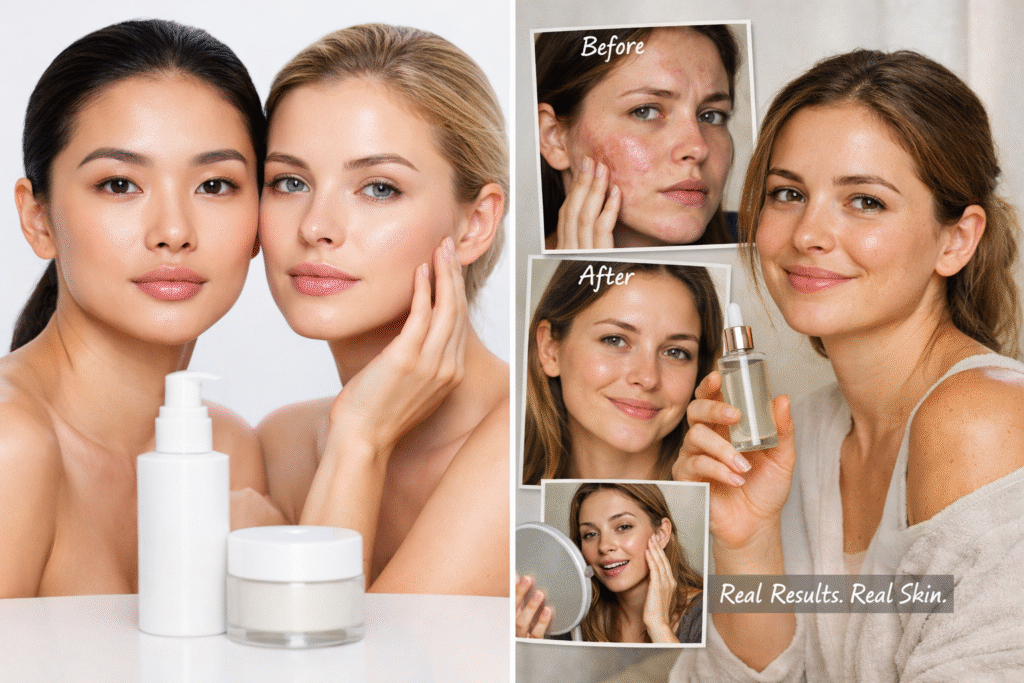
AI can generate faces — but it doesn’t feel skin insecurity.
Acne scars.
Hyperpigmentation.
Sensitive skin anxiety.
Fear of wasting money.
Without strategy, artificial intelligence ads focus on features instead of feelings.
Consequences for Beauty Brands
When emotional pain points are ignored:
Ads feel cold
Viewers don’t relate
Scroll rate increases
People don’t buy skincare because it’s “innovative.”
They buy because it solves a fear.
Solution: Build Emotional Frameworks Into AI Prompts
Before creating ai generated ads, define:
One core pain point
One emotional trigger
One transformation outcome
Then let AI visualize that story.
AI did this — but strategy told it what to do.
This is not all — and this mistake costs brands millions.
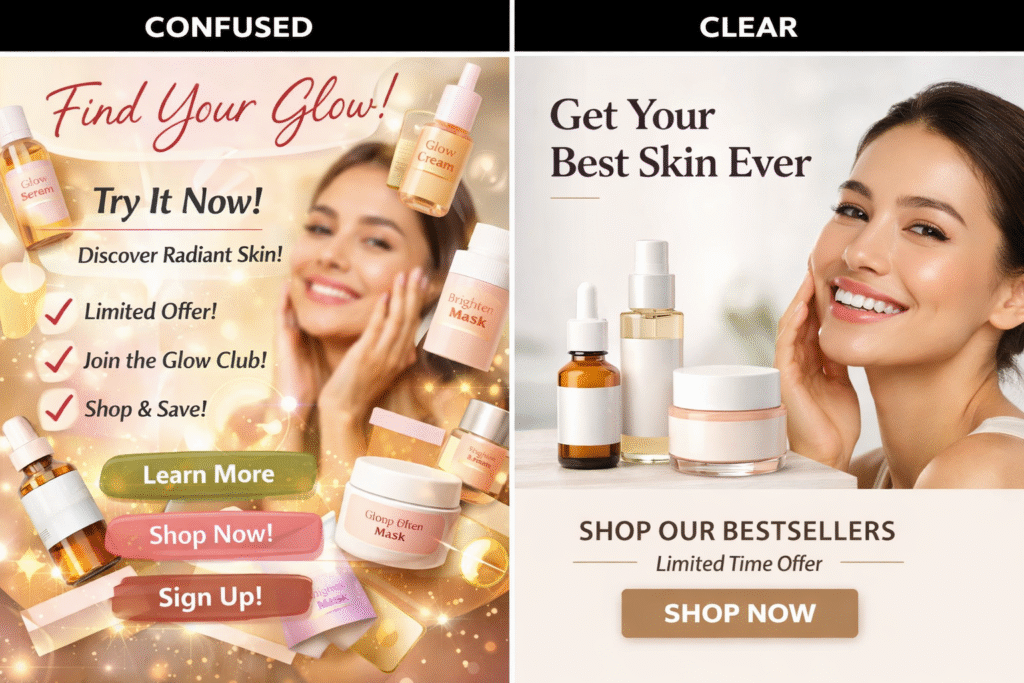
AI generated ads often end with:
“Learn more”
“Shop now”
“Discover”
Sounds harmless, right?
Wrong.
In beauty marketing, CTAs must match buyer awareness stage.
Consequences for Beauty Brands
Misaligned CTAs cause:
Low click-through rates
Poor funnel progression
Wasted ad spend
A cold audience isn’t ready to “Buy Now.”
Solution: Strategic CTA Mapping
High-performing ai advertising uses:
Soft CTAs for cold traffic
Proof-based CTAs for warm audiences
Conversion CTAs for retargeting
Strategy tells AI what action to ask for and when.
Here’s the uncomfortable one.
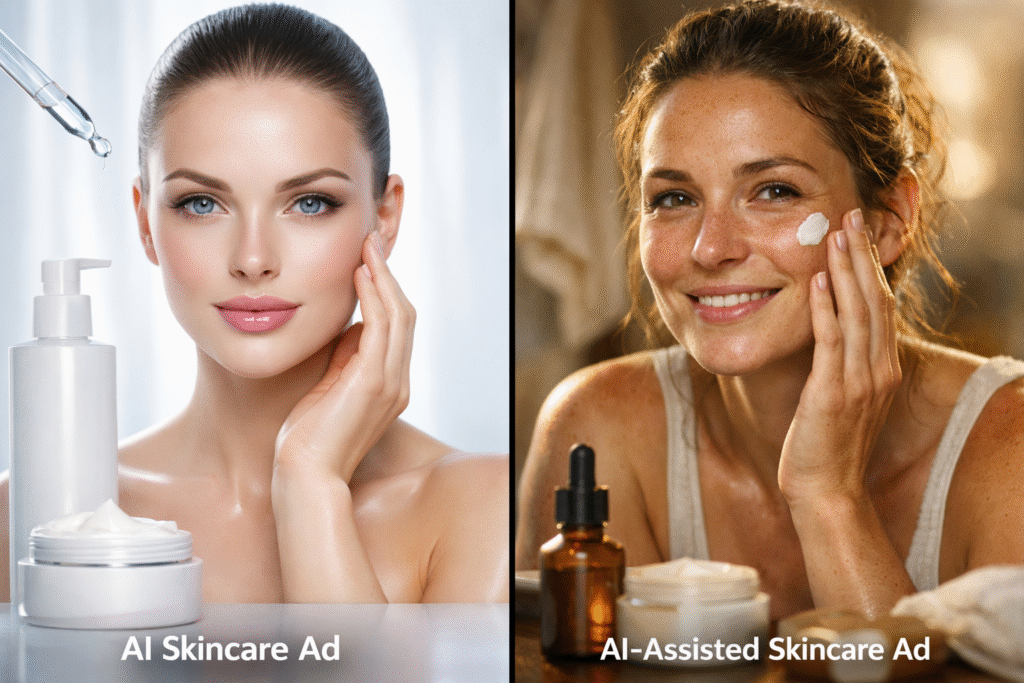
When everything is AI:
Faces
Voices
Scripts
Visuals
Audiences start feeling deceived.
“This Wasn’t Filmed by a Human” is impressive — until it feels dishonest.
Consequences for Beauty Brands
Over-automated ai generated ads can:
Trigger skepticism
Reduce credibility
Increase negative comments
Beauty buyers want authenticity, not perfection.
Solution: Human-Guided AI Execution
The winning formula in 2026:
AI for production
Humans for strategy
Humans for storytelling
No influencer needed — but human judgment still is.
| Aspect | Without Strategy | With Strategy |
|---|
| Brand Trust | Declines | Strengthens |
| Visual Consistency | Random | Cohesive |
| Emotional Impact | Weak | Strong |
| CTA Performance | Low | High |
| Long-Term ROAS | Decreases | Scales sustainably |
Before launching ai generated ads:
Never replace strategy with automation
Avoid over-promising results
Respect platform ad policies
Test before scaling
Maintain human oversight
Use AI for speed, not thinking
Repeat winning formats
Anchor ads in real skin concerns
Keep messaging simple
Build trust before selling
Are you wondering how to do it?
Don’t worry if you don’t have the budget to create AI videos.
Start with:
One product
One pain point
One ad format
Scale only what works.
AI ads changed real estate ads forever — but beauty requires finesse.
AI generated ads are not the enemy.
Strategy-less AI advertising is.
In 2026, beauty brands that win will:
Combine artificial intelligence ads with human insight
Respect emotional buying behavior
Use AI as a tool — not a shortcut
Brands don’t want you to see this — but now you know.
Maximize sales by using expert strategies
- How AI Video ads are transforming eCommerce Marketing in 2026?
- Create AI Video Ads in seconds using CAPCUT AI Tool
- 10 Hidden ways I am using AI Video Ads to grow eCommerce Sales
- Hidden expert Strategies: AI Video Ads for eCommerce 2026
- AI Video Ads for Beauty Brands in 2026
- Why AI Video Ads dominate in 2026?
- Best Free AI Video Generator in 2026
- Make LONG AI Generated Videos FREE
- Why AI CGI Ads are getting worse and how to solve?
- 7 reasons AI Generated Ads Fail
- How to use Pixverse AI for FREE AI Video Generation
- 9 AI Ad mistakes killing FaceBook performance in 2026
- 5 Reasons why AI Generated Ads without Strategy Destroy Beauty Brands in 2026
- How to make AI Ads for Cosmetics eCommerce Brands in 2026
- How to create AI Beauty product Ad for Eyebrow Promotion
- STOP blaming your Lipstick and start using AI Storytelling Ads in 2026
- Stop blaming your Sunscreen
- 7 Contouring Hacks for Beauty Brands to boost sales in 2026
- Stop blaming your foundation and fix Ads Results using AI Storytelling Ads
- Why do my lashes keep falling out AI Ads?
- How secret skincare serum can increase sales for a brand?
- Secret skin care serum to boost sales
- How to stop your foundation from oxidizing?
- STOP blaming your foundation and start using AI Storytelling Ads in 2026
- How to sell beauthy products online in 2026 using AI Video Ads (10 Examples)
- 5 Skin care mistakes to STOP Aging
- 4 Steps Night Skin care Routine to stay young
- Eye care Routine 2026: 7 daily habits for Healthy eyes
- How to fix low sales in 2026?
- Increase sales Fast: Skincare Routine Marketing in 2026
- AI YouTube Ads to 10x Sales in 2026
- 10X Sales in 2026 using FaceBook Ads AI
- AI for Marketing: How to grow sales exponentially in 2026
AI generated ads without strategy damage beauty brand trust by creating inconsistent visuals, weak emotional connections, poor CTAs, and over-automation. When paired with clear messaging, visual systems, and human oversight, ai advertising becomes a powerful growth engine instead of a trust killer.
At Samin AI Marketing Hub, we built our entire CGI advertising framework around one core insight: why AI ads are getting worse is not a technology issue—it’s a brand strategy failure. That’s why we don’t start with effects, prompts, or automation. We start with brand perception, buyer psychology, and conversion intent. Before a single frame is generated, we map your beauty brand’s positioning, price point, target audience, and emotional triggers. This ensures every AI ad we create reinforces trust, elevates perceived value, and supports sales—not just views.
We believe why AI ads are getting worse has nothing to do with AI tools—and everything to do with missing brand intelligence. Most ads fail because they start with effects instead of strategy. We reverse this completely.
Before creating any AI visuals, we define:
Brand positioning (luxury, masstige, indie, or clinical beauty)
Target buyer psychology and buying triggers
Price perception and value signaling
Platform-specific ad intent (paid ads vs organic virality)
Conversion goal (trust, education, or purchase)
This strategic foundation ensures every AI CGI ad supports brand perception first, not visual chaos. By anchoring creativity to intent, we eliminate the core problem behind why AI ads are getting worse and build ads that feel premium, intentional, and trustworthy to beauty consumers.
Once strategy is locked, we use AI as an enhancement layer—not a decision-maker. This is where most brands fail and why AI ads lose credibility. Our process is human-directed, conversion-focused, and realism-driven.
Our AI execution framework focuses on:
Studio-grade lighting to maintain luxury perception
Realistic material and texture simulation (glass, liquid, cream, shimmer)
Clear product hierarchy so the product remains the hero
Controlled motion that feels natural, not exaggerated
Camera angles designed to increase perceived product quality
Visual pacing aligned with beauty buying psychology
By blending AI speed with human creative control, we avoid the pitfalls that explain why AI ads are getting worse across the industry. The result is AI advertising that builds trust, supports sales, and protects long-term brand equity—especially for beauty brands targeting premium and U.S. markets.
At Samin AI Marketing Hub, we don’t chase viral visuals.
We build brand-safe AI ads that convert attention into revenue.
Ready to start creating viral, high-converting AI video ads for your brand? Join my AI Video Ads Mastery Course and learn how to create cinematic ads in minutes: no studio, no actors, no editing skills needed.
 Enroll now and transform the way you market in 2026.
Find quick answers to the most common questions about 5 AI Generated Ads without strategy fails for beauty brands? And discover how this simple editing step can instantly make your content more engaging, professional, and ready to grab attention in 2026.
AI generated ads can be extremely effective for beauty brands, but ai generated ads without strategy can quickly damage brand trust and campaign performance. When beauty brands rely solely on automation without defining messaging, visual consistency, or compliance guidelines, ads may appear generic or misleading. However, when AI is guided by clear brand positioning and ethical marketing standards, it becomes a powerful production tool rather than a risk factor.
AI generated ads without strategy often feel inconsistent, emotionally disconnected, or overly artificial. In skincare marketing, trust is everything. When visuals are unrealistic or messaging lacks clarity, consumers become skeptical. Over time, repeated exposure to poorly structured AI advertising reduces brand credibility, which directly impacts engagement, conversion rates, and long-term loyalty.
Yes, small beauty brands can absolutely benefit from AI advertising, especially because it reduces production costs and accelerates creative testing. However, ai generated ads without strategy can lead to wasted ad spend, inconsistent messaging, and poor performance. The key is to start with one clear pain point, one defined audience, and one cohesive brand voice before scaling AI campaigns.
Are AI generated ads without strategy allowed on Facebook and Instagram?
AI generated ads without strategy are technically allowed on Facebook and Instagram, but they often run into policy issues if claims are exaggerated or visuals imply unrealistic transformations. Without strategic oversight, artificial intelligence ads may unintentionally violate platform guidelines. Strategic review and compliance checks are essential to ensure consistent delivery and account stability.
Do AI generated ads perform better than influencer ads?
AI generated ads can outperform influencer ads in scalability and consistency, but ai generated ads without strategy rarely deliver strong results. Influencer marketing succeeds because it builds trust and relatability. If AI ads fail to replicate authenticity and emotional relevance, they may struggle to convert despite looking polished.
How can brands prevent AI generated ads without strategy from damaging performance?
To prevent ai generated ads without strategy from harming performance, brands must define messaging hierarchy, audience segmentation, and funnel alignment before creating visuals. AI should execute predefined creative direction rather than operate independently. Establishing creative guidelines and testing frameworks ensures that automation enhances performance instead of weakening it.
Why do AI generated ads without strategy often have low conversion rates?
AI generated ads without strategy often lack emotional triggers, strong CTAs, and clear audience targeting. While the visuals may be attractive, they fail to guide viewers toward action. In beauty marketing, consumers need reassurance and relevance before purchasing, and without strategic messaging, conversion rates suffer significantly.
Can AI generated ads without strategy harm long-term brand perception?
Yes, repeated exposure to ai generated ads without strategy can harm long-term brand perception by making the brand appear inconsistent or inauthentic. Beauty consumers are highly sensitive to visual and messaging cues. If AI advertising feels artificial or disconnected from real-world expectations, it reduces trust and brand equity over time.
Is human involvement still necessary when using AI advertising?
Human involvement is critical because ai generated ads without strategy lack emotional intelligence, compliance awareness, and audience psychology. While AI accelerates production, humans must guide positioning, storytelling, and ethical boundaries to ensure campaigns build trust instead of damaging it.
What is the future of AI generated ads in beauty marketing?
The future of AI generated ads in beauty marketing lies in hybrid execution—combining automation with human strategy. Brands that avoid ai generated ads without strategy and instead use structured creative frameworks will scale sustainably. The winning approach in 2026 is not fully automated marketing, but strategically guided AI advertising.