


Beauty founders, This is why most AI CGI ads make your brand look cheap.
AI-generated CGI ads are everywhere in 2026.
Scroll Instagram.
Open TikTok.
Watch YouTube Shorts.
You’ll see floating lipsticks, melting serums, glowing foundations, impossible textures, and hyper-stylized visuals created entirely by AI.
At first glance, they look impressive.
But here’s the uncomfortable truth:
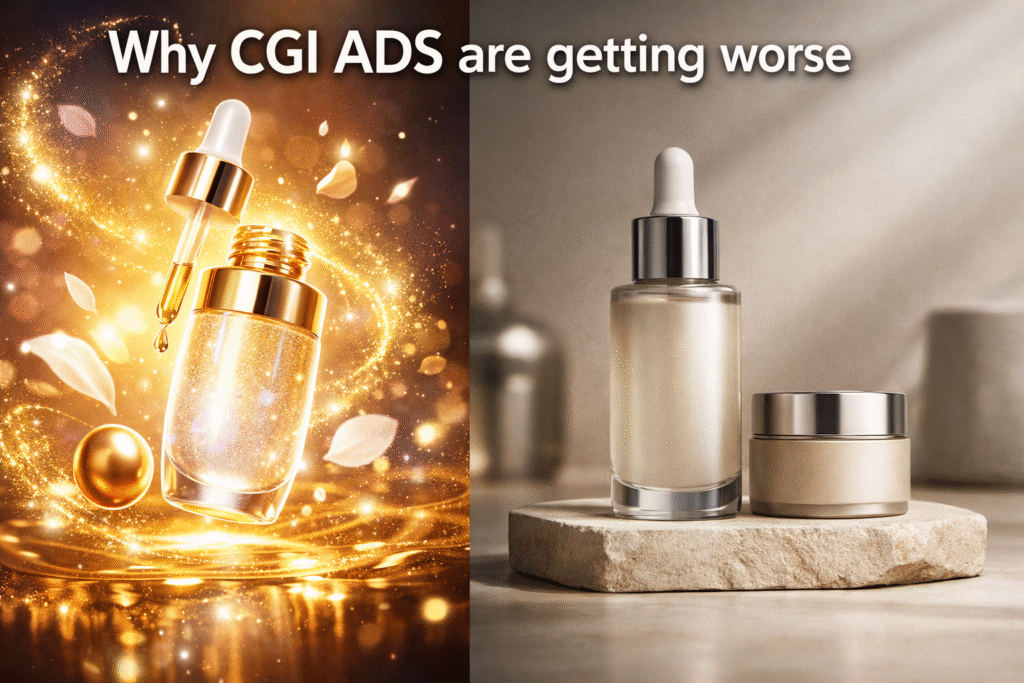
Why AI CGI ads are getting worse has nothing to do with technology—and everything to do with how brands are using it.
Beauty customers don’t buy visuals.
They buy trust, realism, and perception.
And when AI CGI ads prioritize flashy effects over brand credibility, they silently destroy conversion power.
This blog breaks down why AI CGI ads are getting worse, especially for beauty brands, and how to avoid the mistakes that are killing trust in 2026.
AI made CGI ads accessible to everyone.
What once required:
3D artists
Weeks of production
High budgets
Now takes:
One prompt
One click
Zero brand thinking
This democratization created a massive problem.
Too much CGI, not enough brand sense.
That’s the core reason why AI CGI ads are getting worse.
Beauty is a trust-driven industry.
Customers evaluate:
Texture realism
Lighting accuracy
Skin interaction
Packaging hierarchy
Ingredient believability
When CGI exaggerates these elements unnaturally, the brain flags it as fake.
And fake equals cheap.
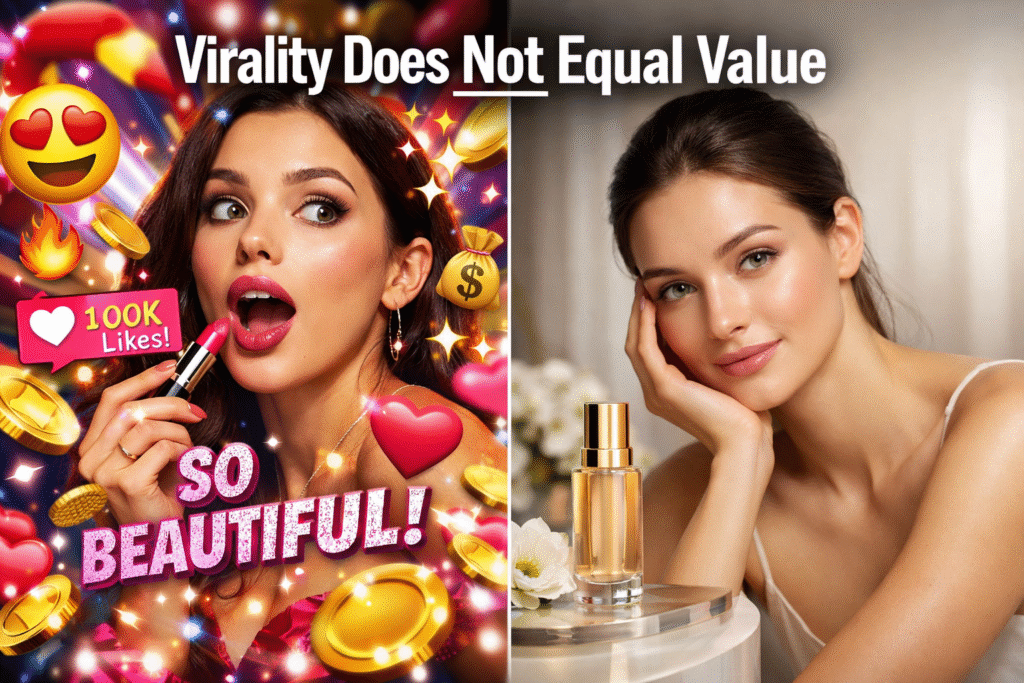
That’s why virality doesn’t equal value in beauty advertising.
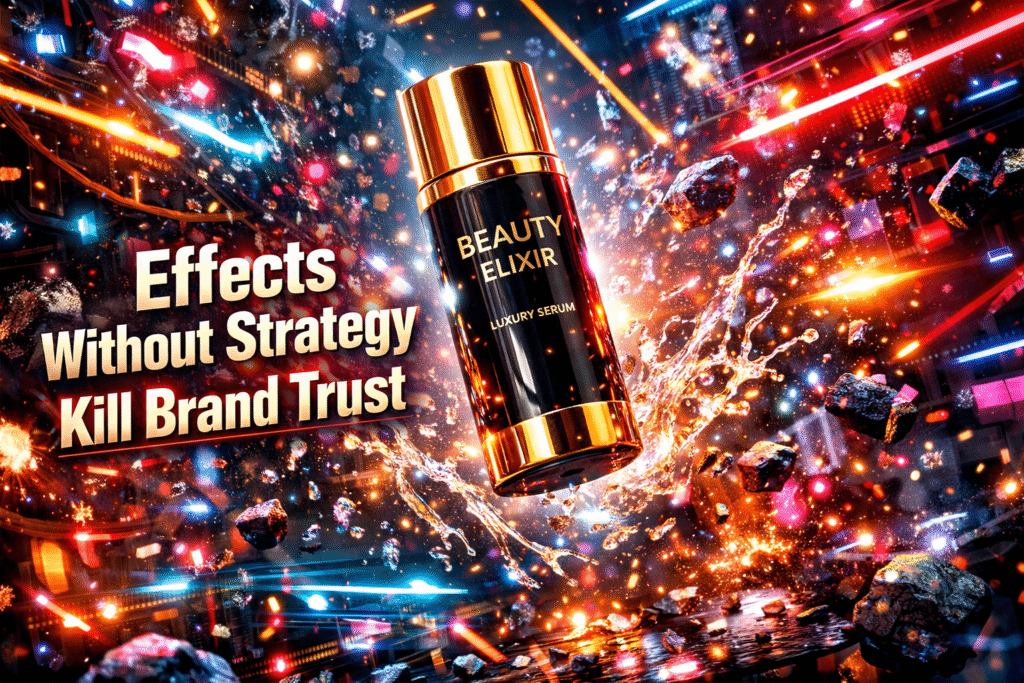
Most AI CGI ads fail because they chase:
Explosions
Floating products
Unreal physics
Over-glow
Hyper saturation
But beauty brands need:
Subtlety
Elegance
Texture accuracy
Product dominance
This disconnect explains why AI CGI ads are getting worse for premium brands.
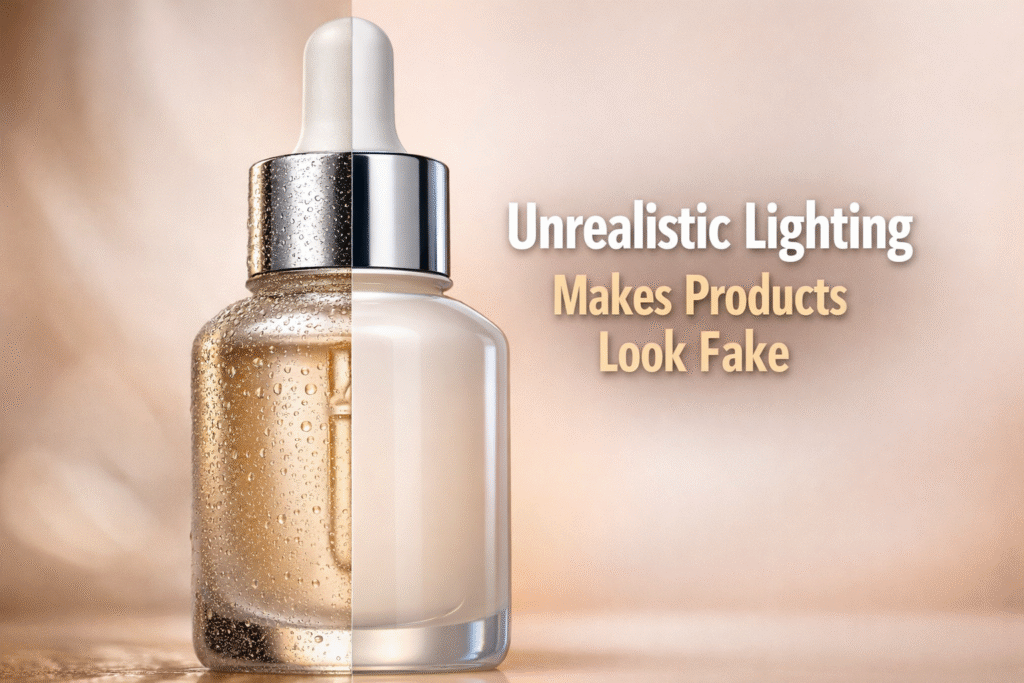
Lighting is everything in beauty.
AI CGI ads often use:
Flat lighting
Unreal highlights
Over-reflective surfaces
Real beauty lighting:
Mimics studio softboxes
Controls shadow depth
Enhances texture without distortion
When lighting feels fake, the product feels fake.
And customers subconsciously reject it.
Beauty customers are experts.
They know how:
Serum viscosity behaves
Cream spreads on skin
Powder reflects light
Gloss catches highlights
AI often:
Makes liquids look plastic
Skin look airbrushed
Products look toy-like
This is a major reason why AI CGI ads are getting worse in beauty marketing.
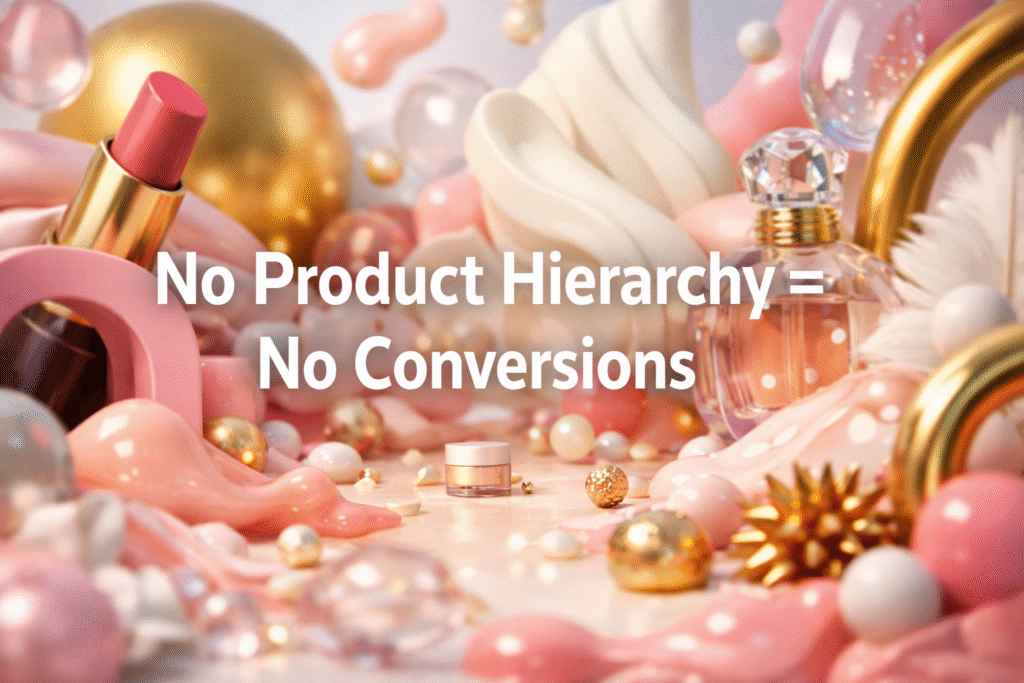
In high-converting beauty ads:
The product is the hero
The environment supports it
The message is clear
Bad AI CGI ads:
Overpower the product with effects
Distract from packaging
Hide branding
If the viewer can’t instantly identify the product, the ad fails.
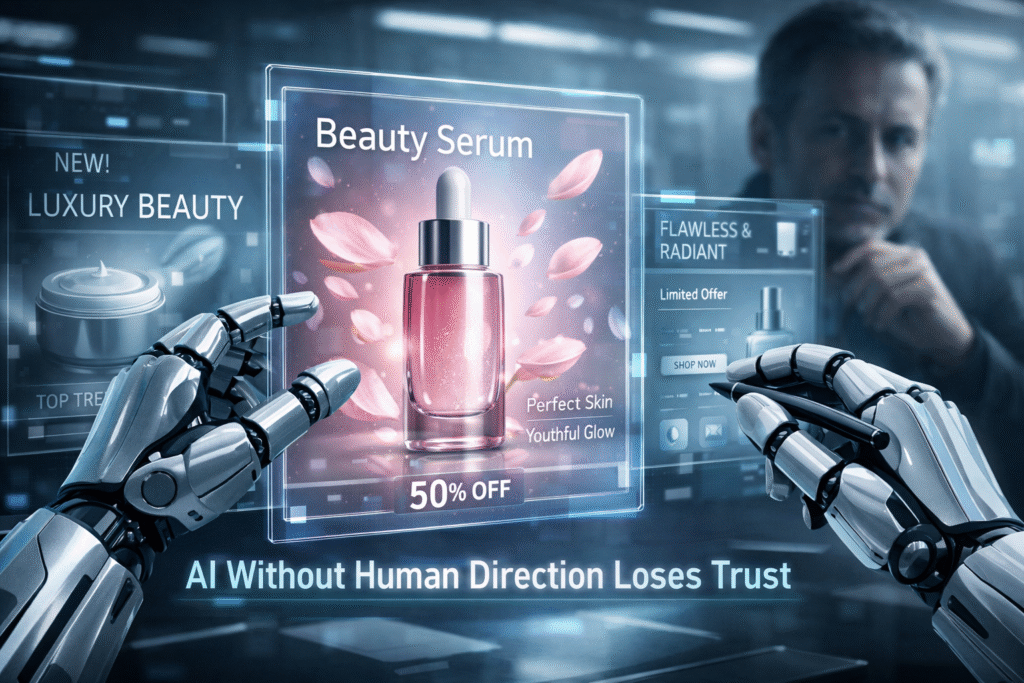
AI doesn’t understand:
Brand positioning
Luxury vs mass appeal
Emotional cues
Cultural beauty signals
Without human oversight, AI outputs visuals that feel impressive but empty.
That’s a key reason why AI CGI ads are getting worse in 2026.
Beauty advertising relies on:
Sensory realism
Emotional reassurance
Authentic results
CGI mistakes damage:
Brand authority
Price justification
Customer confidence
Once trust is broken, no amount of effects can fix it.
Using AI without brand guidelines
Overusing glow, shine, and motion
Ignoring realistic lighting physics
Making textures look synthetic
Letting effects overpower the product
Copying viral CGI trends blindly
Skipping human art direction
Treating beauty like gaming visuals
Forgetting skin realism
Confusing attention with conversion
Design CGI around brand perception
Match lighting to real beauty studios
Prioritize texture realism over effects
Keep the product as the visual hero
Limit motion to purposeful moments
Use CGI to enhance—not replace—reality
Always apply human creative direction
Test ads for trust, not just views
Build CGI scenes around emotion
Think “Would this work in real life?”
| Element | Bad AI CGI Ads | Brand-Safe AI CGI Ads |
|---|---|---|
| Lighting | Overexposed, fake | Studio-realistic |
| Texture | Plastic, glossy | Skin-accurate |
| Motion | Excessive | Controlled |
| Product Focus | Lost in effects | Clear hero |
| Trust Level | Low | High |
| Conversion | Poor | Strong |
At Samin AI Marketing Hub, we built our entire CGI advertising framework around one core insight: why AI CGI ads are getting worse is not a technology issue—it’s a brand strategy failure. That’s why we don’t start with effects, prompts, or automation. We start with brand perception, buyer psychology, and conversion intent. Before a single CGI frame is generated, we map your beauty brand’s positioning, price point, target audience, and emotional triggers. This ensures every AI CGI ad we create reinforces trust, elevates perceived value, and supports sales—not just views.
We believe why AI CGI ads are getting worse has nothing to do with AI tools—and everything to do with missing brand intelligence. Most CGI ads fail because they start with effects instead of strategy. We reverse this completely.
Before creating any AI CGI visuals, we define:
Brand positioning (luxury, masstige, indie, or clinical beauty)
Target buyer psychology and buying triggers
Price perception and value signaling
Platform-specific ad intent (paid ads vs organic virality)
Conversion goal (trust, education, or purchase)
This strategic foundation ensures every AI CGI ad supports brand perception first, not visual chaos. By anchoring creativity to intent, we eliminate the core problem behind why AI CGI ads are getting worse and build ads that feel premium, intentional, and trustworthy to beauty consumers.
Once strategy is locked, we use AI as an enhancement layer—not a decision-maker. This is where most brands fail and why AI CGI ads lose credibility. Our process is human-directed, conversion-focused, and realism-driven.
Our AI CGI execution framework focuses on:
Studio-grade lighting to maintain luxury perception
Realistic material and texture simulation (glass, liquid, cream, shimmer)
Clear product hierarchy so the product remains the hero
Controlled motion that feels natural, not exaggerated
Camera angles designed to increase perceived product quality
Visual pacing aligned with beauty buying psychology
By blending AI speed with human creative control, we avoid the pitfalls that explain why AI CGI ads are getting worse across the industry. The result is AI CGI advertising that builds trust, supports sales, and protects long-term brand equity—especially for beauty brands targeting premium and U.S. markets.
At Samin AI Marketing Hub, we don’t chase viral visuals.
We build brand-safe AI CGI ads that convert attention into revenue.
Why AI CGI ads are getting worse is not an AI problem—it’s a strategy problem. When beauty brands chase attention instead of trust, CGI becomes a liability instead of a growth tool. AI can elevate beauty advertising, but only when guided by human judgment, brand positioning, and realism. The brands that win in 2026 won’t be the loudest or flashiest—they’ll be the most believable.
Beauty customers are smarter than ever. They can instantly sense when visuals are fake, exaggerated, or disconnected from reality. If your AI CGI ads don’t respect perception, lighting, texture, and hierarchy, they won’t convert—no matter how viral they look. Fixing why AI CGI ads are getting worse starts with treating CGI as a brand asset, not a shortcut.
Maximize sales by using expert strategies
- How AI Video ads are transforming eCommerce Marketing in 2026?
- Create AI Video Ads in seconds using CAPCUT AI Tool
- 10 Hidden ways I am using AI Video Ads to grow eCommerce Sales
- Hidden expert Strategies: AI Video Ads for eCommerce 2026
- AI Video Ads for Beauty Brands in 2026
- Why AI Video Ads dominate in 2026?
- Best Free AI Video Generator in 2026
- Make LONG AI Generated Videos FREE
- Why AI CGI Ads are getting worse and how to solve?
- 7 reasons AI Generated Ads Fail
- How to use Pixverse AI for FREE AI Video Generation
- 9 AI Ad mistakes killing FaceBook performance in 2026
- 5 Reasons why AI Generated Ads without Strategy Destroy Beauty Brands in 2026
- How to make AI Ads for Cosmetics eCommerce Brands in 2026
- How to create AI Beauty product Ad for Eyebrow Promotion
- STOP blaming your Lipstick and start using AI Storytelling Ads in 2026
- Stop blaming your Sunscreen
- 7 Contouring Hacks for Beauty Brands to boost sales in 2026
- Stop blaming your foundation and fix Ads Results using AI Storytelling Ads
- Why do my lashes keep falling out AI Ads?
- How secret skincare serum can increase sales for a brand?
- Secret skin care serum to boost sales
- How to stop your foundation from oxidizing?
- STOP blaming your foundation and start using AI Storytelling Ads in 2026
- How to sell beauthy products online in 2026 using AI Video Ads (10 Examples)
- 5 Skin care mistakes to STOP Aging
- 4 Steps Night Skin care Routine to stay young
- Eye care Routine 2026: 7 daily habits for Healthy eyes
- How to fix low sales in 2026?
- Increase sales Fast: Skincare Routine Marketing in 2026
- AI YouTube Ads to 10x Sales in 2026
- 10X Sales in 2026 using FaceBook Ads AI
- AI for Marketing: How to grow sales exponentially in 2026
Why AI CGI ads are getting worse comes down to misuse, not capability. Over-effects, poor lighting, fake textures, and lack of human direction are damaging beauty brand trust. When AI is used responsibly—with realism, strategy, and brand safety—it becomes powerful. When it’s used carelessly, it makes even premium beauty brands look cheap.
Ready to start creating viral, high-converting AI video ads for your brand? Join my AI Video Ads Mastery Course and learn how to create cinematic ads in minutes: no studio, no actors, no editing skills needed.
 Enroll now and transform the way you market in 2026.
Find quick answers to the most common questions about WHY AI CGI Ads are getting worse? and discover how this simple editing step can instantly make your content more engaging, professional, and ready to grab attention in 2026.
Because brands prioritize speed and virality over realism, trust, and brand perception.
No—but poorly executed ones damage credibility and lower conversion rates.
Yes, when guided by human strategy, lighting accuracy, and texture realism.
Do customers trust AI CGI ads?
Only when they feel realistic and brand-aligned.
What’s the biggest mistake causing why AI CGI ads are getting worse?
Ignoring brand perception in favor of visual effects.
Why AI CGI ads are getting worse despite better AI tools?
AI CGI ads are getting worse because many brands rely on tools without creative direction or brand strategy. Advanced AI cannot replace human judgment in lighting, texture realism, storytelling, and brand perception. When AI is used without oversight, the result feels artificial and damages trust.
Why AI CGI ads are getting worse for beauty and skincare brands specifically?
Beauty consumers are highly sensitive to realism and authenticity. AI CGI ads are getting worse in beauty marketing because exaggerated textures, unrealistic lighting, and over-polished effects immediately signal “fake,” causing viewers to doubt product quality and results.
Why AI CGI ads are getting worse on social media platforms in 2026?
AI CGI ads are getting worse on social media because algorithms reward speed and volume, pushing brands to produce low-quality visuals quickly. This leads to repetitive, generic CGI that blends in and reduces brand credibility instead of building differentiation.
Why AI CGI ads are getting worse for conversion-focused campaigns?
AI CGI ads are getting worse for conversions when they prioritize virality over clarity. Flashy visuals without clear product hierarchy, usage context, or benefit communication confuse viewers and reduce purchase intent.
Why AI CGI ads are getting worse without human creative control?
AI CGI ads are getting worse when brands remove human direction entirely. AI can generate visuals, but only humans can judge emotional impact, brand alignment, and trust signals. Without creative leadership, AI outputs feel empty and disconnected from real buyer psychology.