


Digital Marketing Trends 2026 are evolving with AI. The digital environment in 2026 is defined by four major forces:
AI as a collaborator, not a tool
Brand discovery shifting from search to ecosystems
Content consumption becoming multi-modal
Globalization as an expectation, not a strategy
Consumers in 2026 don’t wait to find brands—brands must appear where they already spend time. Search engines, social feeds, AI chat assistants, creator marketplaces, podcasts, livestreams, and micro-communities all function as “first-touch platforms.”
To remain competitive, companies must master attention, personalization, relevance, and AI-powered experience architecture.
Below are the six most important digital marketing trends 2026 that define this new reality.
Why This Trend Matters
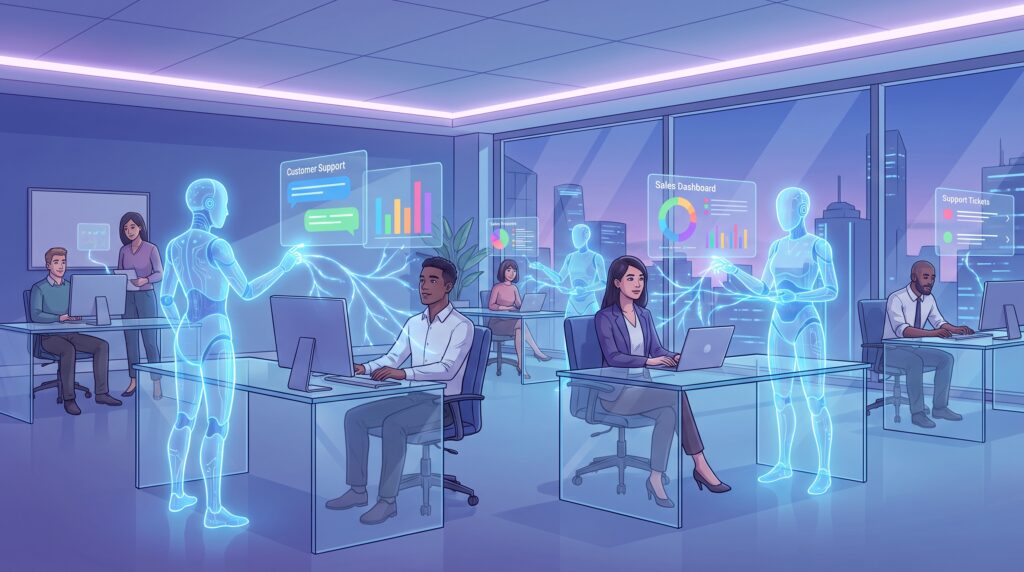
2026 marks the first year where AI agents fully replace entire operational layers—not to eliminate employees but to augment, automate, and accelerate workflows.
Customer service, retention, upsells, appointment booking, product recommendations, onboarding flows, and even micro-support interactions are now operated by intelligent autonomous agents—not templated chatbots.
What AI Agents Do in 2026
Interpret customer intent
Access databases in real time
Solve issues without human intervention
Personalize offers dynamically
Automate 24/7 cross-channel conversations
Create conversation-driven upsells
Business Impact
| Function | Impact of AI Agents |
|---|---|
| Customer Support | Faster response, lower costs, higher satisfaction |
| Sales | Automated upsells, dynamic offers |
| Retention | Reduced churn via proactive alerts |
| Lead Nurturing | Personalized flows per user |
| Scaling | No cost per seat |
Pro Tips
Train agents on tone of voice, product knowledge, objections.
Connect them with CRM + Support + Analytics + Website.
Use them to test pricing, offers, and user intent.
Precautions
Don’t launch agents without oversight.
Avoid aggressive upsells—they destroy trust.
Ensure data privacy compliance.
Future Prediction (2030)
Every website, every SaaS tool, and every business will deploy multi-agent ecosystems—sales agent, retention agent, support agent, onboarding agent.
Brands without AI agents will seem outdated, slow, and inefficient.
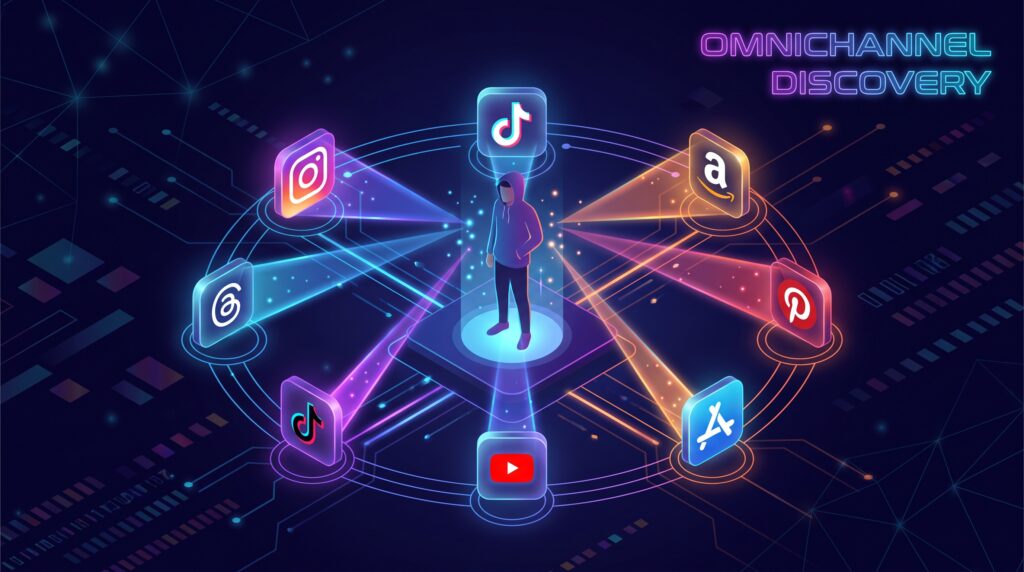
The Collapse of Single-Channel Search
Google is still powerful, but in 2026 it controls far less of the “first-touch” discovery journey.
Consumers now search on:
App Store
AI chat assistants
Community platforms
Private search ecosystems
Daily Search Volume Overview (2026)
| Platform | Daily Searches (approx.) | Nature of Searches |
|---|---|---|
| 7–8B | Visual, product, influencer-led | |
| TikTok | 5B+ | Recommendations, reviews, trends |
| Amazon | 3.5B+ | Buy-ready product searches |
| YouTube | 1B+ | Educational, long-form research |
| App Store | 500M+ | Product, apps, tools |
Why This Matters
Consumers want answers in the format they prefer:
Video
Short clips
Image carousels
Audio
Interactive search
AI chat responses
If your brand isn’t discoverable across these formats, you lose the modern buyer.
Pro Tips
Optimize content for visual search using keyword + intent clustering.
Post multi-format content (reels, shorts, carousels, long-form).
Track brand search volume across all platforms—not just Google.
Precautions
Don’t rely on a single platform for traffic.
Avoid copying SEO from 2020–2023—it’s outdated.
Future Prediction (2030)
AI search engines (OpenAI, Google Gemini, Meta AI) will become the default “first-touch discovery” layer.
Brands will need AI-optimized content, not just SEO.
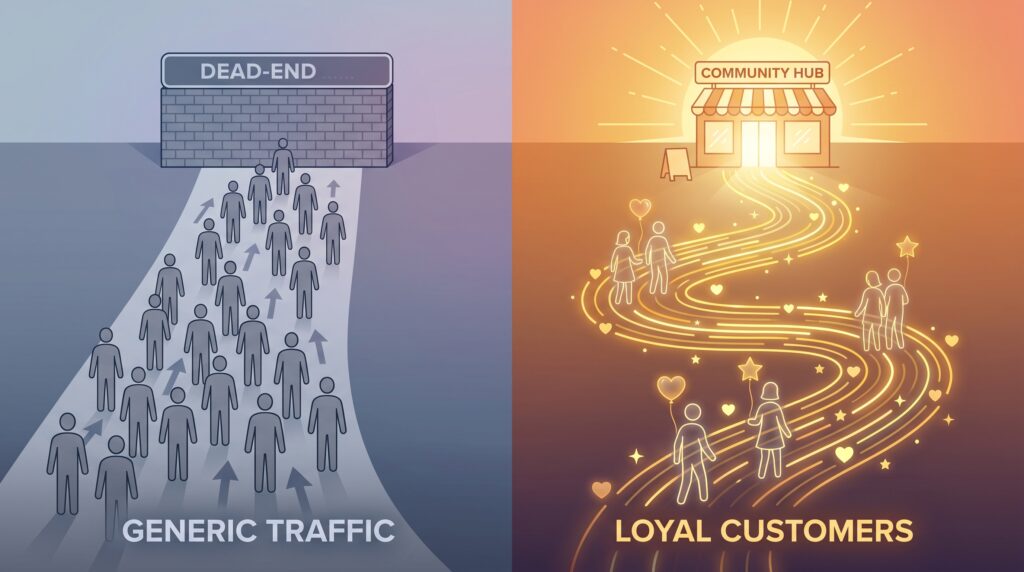
Why Demand > Traffic in 2026
Traffic without demand = no ROI.
Demand without traffic = guaranteed growth.
Modern customers require 11.1 touchpoints before purchasing—up from 8.5 just a few years ago.
But 59 percent of Google searches end without a click, meaning people are researching brands without visiting websites.
Key Takeaway
Brand strength determines conversion probability more than traffic volume.
How to Measure Brand Demand
Use:
Google Trends
Instagram search volume
TikTok search visibility
YouTube “brand search” analytics
Social listening platforms
Table: Brand Metrics That Matter in 2026
| Metric | Why It Matters |
|---|---|
| Brand searches | Signals growth, trust, recognition |
| Repeat visitors | Indicates loyalty & audience quality |
| Creator mentions | Major influence on discovery |
| Direct traffic | Strongest indicator of brand power |
| Recall rate | Drives conversions & pricing power |
Pro Tips
Grow “brand search” with influencer partnerships.
Run educational content instead of only promotional.
Build brand recall through consistent messaging.
Precautions
Don’t obsess over short-term performance metrics.
Avoid over-reliance on paid ads—brand weakens long-term.
Future Prediction (2030)
Brand demand will become the top ranking factor across all AI search engines.
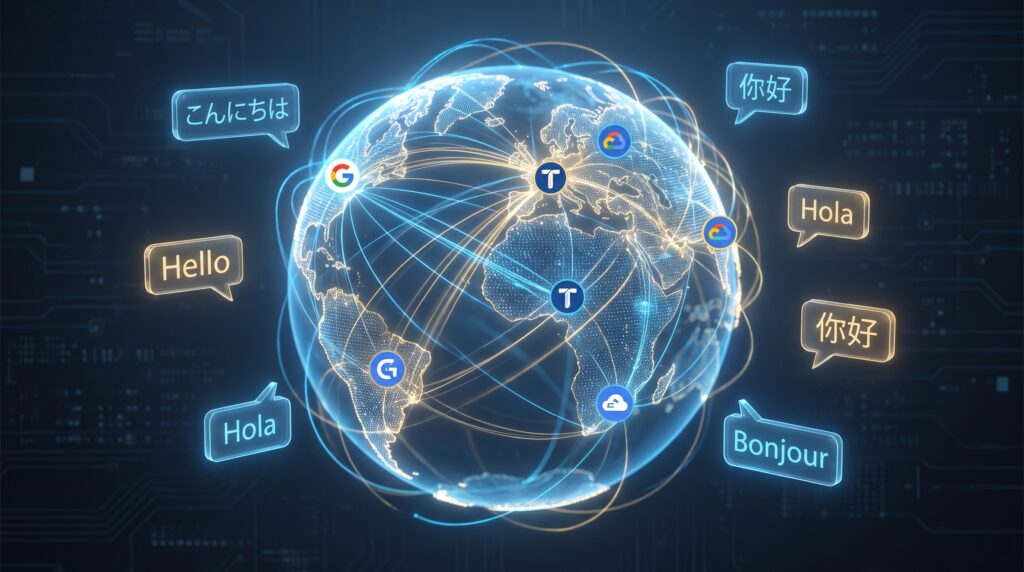
A Shift From “Local First” to “Global Always”
In 2026, global scaling is not a big-company advantage—it’s a requirement for growth.
Key Drivers
AI translation is instant and accurate
Social platforms distribute globally
Competition is lower outside the U.S.
International ROAS is significantly higher
Essential Tools for Global Expansion
| Tool | Use Case |
|---|---|
| HeyGen | Multi-language video dubbing |
| ChatGPT | Text translation + localization |
| Hreflang | SEO indexing across countries |
| DeepL | Advanced translation accuracy |
| VidTranslate | Multi-accent voice cloning |
Pro Tips
Localize—not translate—content.
Adapt CTAs, visuals, cultural details, pricing.
Study competitor presence in each region.
Precautions
Avoid U.S.-centric messaging in foreign markets.
Respect cultural sensitivities.
Always test before scaling ad spend.
Future Prediction (2030)
Brands will create multilingual AI-generated content in real time.
A single video will automatically localize into 120 languages.
Why Podcasting Explodes in 2026
Low competition (under 5M active podcasts)
High income audience (avg. $75k+)
Longer retention + loyalty
Powerful brand storytelling channel
Strong conversion rates
Podcast Listener Behavior (2026)
| Behavior | Value |
|---|---|
| Avg. session length | 28–38 minutes |
| Completion rate | 65%–90% |
| Engagement | 10x longer than social |
| Trust factor | Higher than video or written content |
Pro Tips
Use podcast content to feed short-form clips.
Collaborate with niche hosts for targeted reach.
Add SEO-optimized show notes for discoverability.
Precautions
Don’t produce long episodes with no structure.
Avoid inconsistent posting—it destroys listener trust.
Future Prediction (2030)
Podcast search engines will rival YouTube.
AI will auto-generate podcast episodes based on brand content.
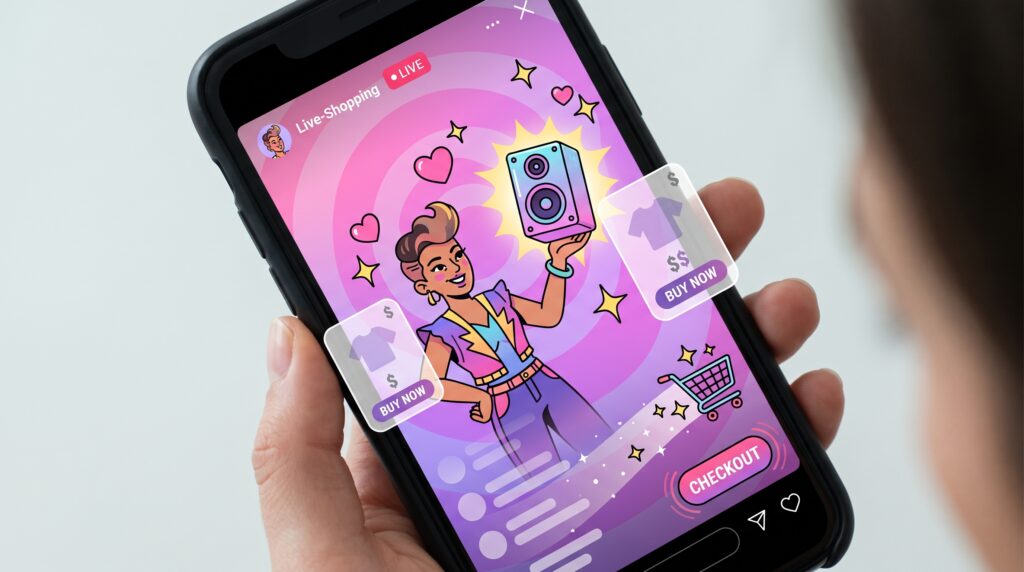
Massive Shift in Buying Behavior
Consumers no longer search for products—they discover them.
2026 Social Commerce Data
TikTok, IG, YouTube drive over $1 trillion annually
Livestream shopping continues to dominate Asia + North America
Communities influence buying decisions more than ads
Influencers function as decentralized sales channels
What Drives Conversions in 2026
Live shopping
Creator-led reviews
Short-form video recommendations
Shoppable carousels
AR try-ons
Micro-community endorsements
Pro Tips
Partner with micro-influencers in niche markets.
Add creator testimonials to product pages.
Use social-native CTAs instead of website-focused CTAs.
Precautions
Avoid overselling—authenticity matters more now.
Don’t rely on one creator for all your traffic.
Future Prediction (2030)
Your entire e-commerce store will live inside social platforms.
Websites will become secondary to social storefronts.
Step 1: Audit Brand Demand
Check brand search volume across all major engines.
Step 2: Deploy AI Agents
Automate top-of-funnel and retention workflows.
Step 3: Build Multi-Format Search Presence
Short video
Long video
Carousel
Blog
Audio
Interactive content
Step 4: Localize Globally
Launch in 3–7 international markets.
Step 5: Launch a Podcast
Build deep trust and long-session engagement.
Step 6: Shift to Social Commerce
Run livestreams, reels, creator-led launches.
Professional Action Framework for 2026
| Task | Traditional Time | AI Time |
|---|
| Casting | 7–21 days | 0 days |
| Filming | 1–5 days | 0 days |
| Editing | 3–10 days | 1–60 minutes |
| Revisions | 2–5 days | Instant |
Don’t rely solely on AI—verify everything.
Don’t build traffic without building brand demand.
Don’t treat global markets as one-size-fits-all.
Don’t ignore privacy and ethical regulations.
Don’t rely on a single acquisition channel.
Build a decentralized content ecosystem.
Use AI to A/B test thousands of creative variations.
Turn each long video into 25+ micro assets.
Create unique content per region using AI + real feedback.
Let creators handle top-of-funnel awareness.
Use Google Trends weekly to track brand momentum.
Below are future-focused insights designed to expand the blog and give readers a clear look at what’s coming next.
1. AI-Native Search Will Replace Keyword Search Completely
As digital marketing trends 2026 evolve, AI-native search engines will shift from showing “links” to giving full conversational results—no scrolling, no clicking, just direct, personalized answers. Brands that don’t structure their content for AI agents, semantic systems, and vector databases will lose visibility overnight. By late 2026, over 70% of searches may never reach a website at all.
2. Autonomous AI Agents Will Manage 40% of Customer Interactions
AI agents won’t just answer support questions; they will complete tasks, upsell products, create offers, and even negotiate prices. This will become the default for digital marketing trends in 2026, especially in eCommerce and SaaS. Companies will shift budgets from human staff to AI agent optimization, creating an entirely new career: “Agent Performance Manager.”
3. Social Platforms Will Become Primary Shopping Destinations
By late 2026, TikTok, YouTube, and Instagram will roll out frictionless, one-click in-video checkouts across every region. As digital marketing trends 2026 push social commerce forward, traditional product pages will become optional. Brands must build awareness, entertainment, and conversion all inside one ecosystem.
4. Predictive Personalization Will Replace A/B Testing
A/B testing will become obsolete as machine learning predicts the winning variant instantly based on behavioral models. The biggest change in digital marketing trends 2026 is that content personalization will occur before the user even lands on your page—powered by AI signals, watch patterns, and preference graphs.
5. Global Micro-Localization Will Become Standard
Thanks to AI translation engines like HeyGen and GPT-powered localization, brands will create content for 20–50 languages at almost zero cost. As digital marketing trends 2026 expand globally, companies will treat each country, region, dialect, and cultural cluster as a unique funnel. This shift will unlock massive revenue for brands that previously only marketed in English.
6. Voice-First Content Will Dominate Over Text-Based Search
Smart speakers, AirPods, and AI assistants will drive a new wave of voice commerce in 2026. The rise of voice-first interaction will shift digital marketing trends 2026 toward micro-podcasts, conversational content, and voice-optimized product descriptions. Text-heavy websites will begin declining as natural speech becomes the preferred discovery method.
7. First-Party Data Will Become More Valuable Than Advertising Spend
With cookies fading and privacy rules tightening, brands will invest more in first-party data than in paid ads. Among all digital marketing trends 2026, the competition for email lists, SMS opt-ins, loyalty programs, and proprietary data ecosystems will become the biggest battleground for revenue stability and predictive modeling.
8. Community-Led Brands Will Outperform Ad-Led Brands
In 2026, communities will outperform ads in ROI, retention, and brand loyalty. Brands that build Discord groups, micro-communities, and content tribes will dominate. This aligns with the bigger shift in digital marketing trends 2026, where engagement and trust matter more than reach or impressions.
9. Augmented Reality Product Experiences Will Become the Norm
AR will move from optional to essential. Consumers will expect to “try before buying” using AR mirrors, lenses, and product previews. Luxury, beauty, and home industries will benefit the most. As digital marketing trends 2026 evolve, AR will become the new equivalent of a product demo—offered instantly and globally.
10. Zero-Click Content Will Become the Primary Format
Content that delivers value directly on-platform—without requiring a click—will become mandatory. LinkedIn posts, TikTok tutorials, Instagram carousels, YouTube Shorts, and AI-generated explainers will dominate visibility. This is one of the most important digital marketing trends 2026, as users prefer immediate insights instead of long navigation journeys.
11. AI Video Generation Will Replace Traditional Production
By late 2026, most brands will produce more AI-generated videos than studio-shot videos. Tools like Runway, Pika, Luma, and VEO will allow marketers to generate ads, product demos, and story-based content in minutes. This shift in digital marketing trends 2026 will dramatically reduce production costs and democratize high-quality visuals for small businesses.
12. Real-Time Behavioral Funnels Will Replace Static Funnels
Marketing funnels will update themselves dynamically based on user behavior in milliseconds. Instead of fixed awareness → consideration → conversion stages, AI will place users in “fluid funnels” that adjust automatically. This marks a major breakthrough in digital marketing trends 2026, eliminating the need for manual segmentation.
13. Trust-Based Marketing Will Overtake Performance Marketing
As distrust in digital ads grows, brands will move toward transparency models—showing real prices, data usage, sustainability metrics, and behind-the-scenes processes. Trust will outperform targeting. This change will redefine digital marketing trends 2026, pushing brands to be more authentic or lose relevance.
14. Creator Partnerships Will Replace Traditional Influencer Marketing
Instead of creators being paid per post, brands will integrate creators directly into their revenue ecosystem—co-branded products, long-term partnerships, and profit-sharing. The biggest opportunity in digital marketing trends 2026 will belong to brands that treat creators as partners, not contractors.
15. Emotional Intelligence Will Become an AI Requirement
AI systems will begin generating responses and content that reflect emotional intent—compassion, urgency, excitement, reassurance. Emotionally-aware AI will reshape digital marketing trends 2026, making messaging more personalized and dramatically increasing conversion rates.
2026 marks the beginning of a new era—one where brands must think globally, act across platforms, integrate AI deeply, build ecosystems, and prioritize brand demand over raw traffic.
Digital Marketing trends 2026 are not about noise it’s all about precision.
Not about content volume—it’s about multi-platform relevance.
Not about chasing trends—it’s about architecting future-proof systems.
If you adapt now, you won’t just survive—you’ll dominate.
Digital marketing trends 2026 are not mild upgrades; they are seismic shifts redefining discovery, attention, trust, and purchase behavior across the world. Consumers now navigate a world with AI-generated content, multi-language journeys, hyper-personalized search, autonomous agents, social storefronts, and immersive brand ecosystems.
Here we discussed 6 most important digital marketing trends 2026, backed by behavioral shifts, emerging technologies, and global economic movements. These trends are not predictions—they are already reshaping how revenue grows, how trust forms, and how customers make decisions.
If your brand adapts, you expand.
If your brand hesitates, you disappear.
Ready to start creating viral, high-converting AI video ads for your brand? Join my AI Video Ads Mastery Course and learn how to create cinematic ads in minutes: no studio, no actors, no editing skills needed.
 Enroll now and transform the way you market in 2026.
Find quick answers to the most common questions about Digital Marketing Trends 2026 and discover how this simple editing step can instantly make your content more engaging, professional, and ready to grab attention in 2026.
The biggest digital marketing trends in 2026 include AI agents, multi-platform search optimization, global localization, social commerce, brand-demand analytics, and podcast-first branding.
AI agents will automate support, sales, onboarding, upsells, and personalization across every brand touchpoint.
Is search engine optimization still important in 2026?
Yes, but now SEO includes Google, Instagram, TikTok, YouTube, Amazon, Pinterest, and AI assistants.
What role does social commerce play in 2026?
Social platforms are now full sales engines with shoppable content, live commerce, and creator-driven product discovery.
Is podcasting still growing in 2026?
Yes—podcasts are one of the fastest-growing traffic channels with high-income, loyal audiences.
Why is global marketing essential in 2026?
Because localization tools are instant, competition is lower internationally, and ROAS is significantly higher.
How important is brand search volume in 2026?
Brand demand is the #1 leading indicator of revenue, repeat purchases, and long-term brand trust.
What skills should marketers learn for 2026?
AI prompt engineering, global content localization, short-form video creation, live commerce strategy, multi-platform SEO.
Does traditional advertising still work in 2026?
Yes, but only when combined with creator-first content and AI-driven personalization.
How can small businesses keep up with digital marketing trends in 2026?
By using AI tools, focusing on brand demand, creating short-form content, running social commerce campaigns, and going multilingual.