



Let’s start with something surprising.
Most people don’t fail because their skincare products are bad.
They fail because their routine is broken.
And here’s the problem…
People keep switching products.
One week they try a trending serum.
Next week they buy another viral product.
Then they say…
“Nothing works for my skin.”
But here’s the truth.
Healthy skin isn’t about random products.
It’s about a consistent night skincare routine.
And when brands understand this principle, they can also build profitable skincare businesses.
Let’s break it down.
Imagine a dramatic scene.
Serum walks into the room crying.
“She replaced me.”
Cleanser gasps.
“With who?!”
Serum wipes tears.
“Some random trending serum from TikTok.”
Toner crosses arms.
“She wasn’t even prepping the skin properly.”
Moisturizer sighs.
“And she never sealed him in.”
Then comes the lesson.
Clean skin first.
Balance with toner.
Apply treatment serum consistently.
Lock with moisturizer.
Serum wipes tears again.
“I wasn’t the problem… the routine was.”
This emotional storytelling technique is powerful for AI for marketing because it teaches customers the importance of a routine while promoting multiple products together.
Night is when the skin repairs itself.
During sleep:
collagen production increases
cell repair accelerates
hydration improves
skin absorbs products better
That’s why dermatologists recommend consistent nighttime routines.
A structured night skincare routine improves:
| Benefit | Result |
|---|---|
| Skin repair | Faster regeneration |
| Hydration | Reduced dryness |
| Anti-aging | Less visible wrinkles |
| Texture | Smoother skin |
Consistency matters more than expensive products.
Here is the simple routine dermatologists recommend.
Cleansing is the most important step.
Throughout the day your skin accumulates:
dirt
oil
pollution
makeup
A gentle cleanser removes these impurities and prepares your skin for treatment products.
Without cleansing, other products cannot absorb properly.
Toners restore skin balance after cleansing.
They help:
tighten pores
balance pH
prepare skin for serums
Skipping toner can reduce the effectiveness of treatment products.
Serums contain concentrated ingredients that address specific problems.
Examples include:
| Serum Type | Benefit |
|---|---|
| Vitamin C | Brightening |
| Retinol | Anti-aging |
| Niacinamide | Oil control |
| Hyaluronic Acid | Hydration |
Consistency is key.
Switching serums too often reduces results.
Moisturizer seals all previous layers.
It helps:
prevent moisture loss
strengthen the skin barrier
maintain hydration overnight
This final step protects the work done by earlier products.
Successful brands understand something important.
Customers don’t want products.
They want solutions.
That’s why brands promote routines.
Example routines include:
| Product | Purpose |
|---|---|
| Cleanser | Skin preparation |
| Toner | Balance |
| Serum | Treatment |
| Moisturizer | Protection |
Selling routines increases:
customer satisfaction
product effectiveness
average order value
If you want to build a skincare brand, product research is the first step.
Look for products with:
repeat purchase behavior
clear skin benefits
strong demand online
Popular skincare products include:
| Category | Demand |
|---|---|
| Vitamin C serums | High |
| Sunscreen | Daily use |
| Retinol creams | Anti-aging |
| Hydrating moisturizers | Universal |
These products perform well in a night skincare routine system.
Before launching a skincare brand, analyze successful competitors.
Examples include:
The Ordinary
CeraVe
Drunk Elephant
Study their:
product positioning
routines
educational content
marketing strategy
Understanding competitors helps you identify market gaps.
To sell skincare products online, create a professional eCommerce store.
Popular platform:
Shopify
Essential pages include:
Homepage
Product pages
Routine guides
Customer reviews
FAQs
Clear product education increases trust.
Before launching a skincare business, analyze successful brands.
Examples include:
The Ordinary
CeraVe
Drunk Elephant
Study:
• product positioning
• routine education
• advertising strategy
• social media content
Competitor research helps you identify opportunities.
Selling skincare online requires a professional store.
Most entrepreneurs use:
Shopify
Your store should include:
• homepage
• product pages
• skincare routine guides
• reviews
• FAQ section
Educational content increases trust.
| Strategy | Result |
|---|---|
| Single product ads | Lower basket value |
| Routine-based marketing | Higher revenue |
| Random purchases | Low retention |
| System-based skincare | Loyal customers |
Routine marketing improves brand loyalty.
To maintain healthy skin:
patch test new products
avoid mixing incompatible ingredients
apply sunscreen during the day
maintain hygiene with applicators
Skincare should support skin health, not stress it.
Many people unknowingly damage their skin.
Common mistakes include:
Over-cleansing
Too much cleansing strips natural oils.
Switching products too often
Skin needs time to adapt.
Skipping moisturizer
Even oily skin requires hydration.
Using strong actives daily
Retinol or acids should be used carefully.
Be consistent
Results appear after weeks of regular routines.
Apply products in order
Light products first, heavier products later.
Use small quantities
Over-application wastes product.
Choose products for your skin type
Dry, oily, and sensitive skin require different ingredients.
Modern skincare brands rely heavily on AI for marketing.
AI tools help brands:
generate creative ads
personalize customer messages
test marketing campaigns quickly
With AI and marketing strategies, brands can scale faster.
Video storytelling is the most effective beauty marketing format.
Creative concepts like the “He Cheated With Another Serum” story make routines memorable.
Benefits of AI video ads include:
| Feature | Benefit |
|---|---|
| Automated production | Lower cost |
| Multiple creative variations | Faster testing |
| Storytelling | Higher engagement |
These ads help skincare brands promote full routines.
If you run a skincare brand, marketing can be overwhelming.
Creating scripts, filming videos, and editing ads requires time and expertise.
Our AI video ads creation service helps brands:
create viral skincare storytelling ads
promote complete skincare routines
increase engagement and conversions
test multiple creative ideas quickly
We transform skincare products into cinematic stories that attract customers and build brand loyalty.
Turn your skincare routine into a story.
Instead of saying:
“Use cleanser, toner, serum, moisturizer.”
Create narratives like:
“Your serum isn’t failing… your routine is.”
Stories educate customers while selling products.
A consistent night skincare routine is the foundation of healthy, glowing skin.
But it’s also the foundation of a successful skincare brand.
When routines are explained clearly, customers trust products more and stick with them longer.
And with the power of AI for marketing, brands can scale their message through creative storytelling.
Consistency builds skin health.
Storytelling builds brands.
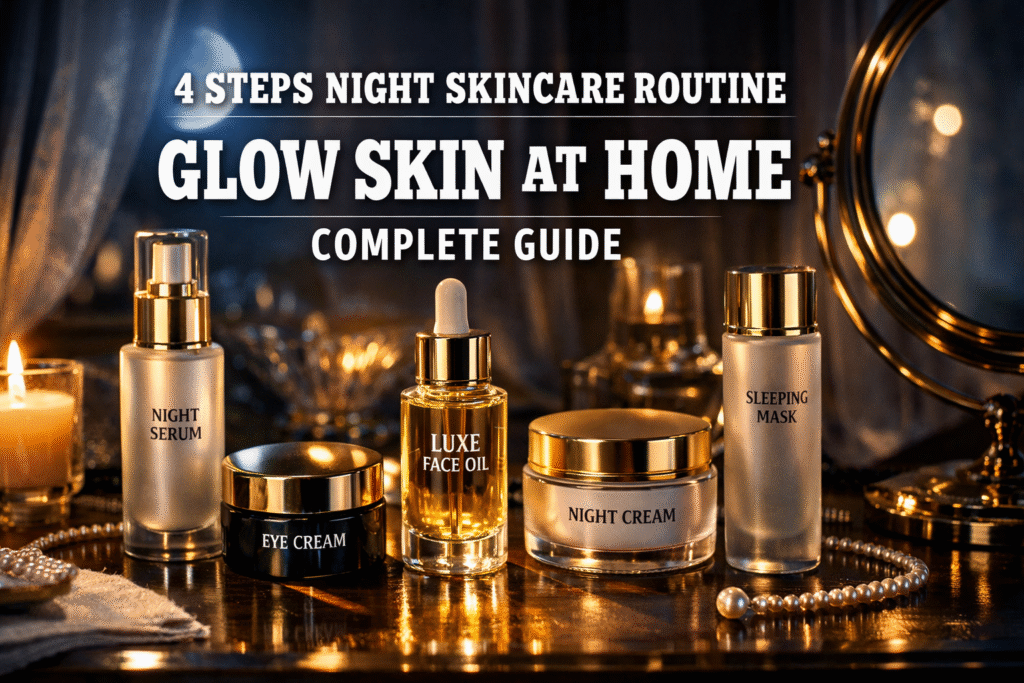
A simple 4 steps night skincare routine can transform your skin over time.
The essential steps include cleansing, toning, applying treatment serum, and moisturizing. Brands that educate customers about routines build stronger relationships and increase product sales. With modern tools like AI and marketing automation, skincare businesses can scale their reach while providing valuable skincare education.
At Samin AI Marketing Hub, we built our entire CGI advertising framework around one core insight: why AI ads are getting worse is not a technology issue—it’s a brand strategy failure. That’s why we don’t start with effects, prompts, or automation. We start with brand perception, buyer psychology, and conversion intent. Before a single frame is generated, we map your beauty brand’s positioning, price point, target audience, and emotional triggers. This ensures every AI ad we create reinforces trust, elevates perceived value, and supports sales—not just views.
We believe why AI ads are getting worse has nothing to do with AI tools—and everything to do with missing brand intelligence. Most ads fail because they start with effects instead of strategy. We reverse this completely.
Before creating any AI visuals, we define:
Brand positioning (luxury, masstige, indie, or clinical beauty)
Target buyer psychology and buying triggers
Price perception and value signaling
Platform-specific ad intent (paid ads vs organic virality)
Conversion goal (trust, education, or purchase)
This strategic foundation ensures every AI CGI ad supports brand perception first, not visual chaos. By anchoring creativity to intent, we eliminate the core problem behind why AI ads are getting worse and build ads that feel premium, intentional, and trustworthy to beauty consumers.
Once strategy is locked, we use AI as an enhancement layer—not a decision-maker. This is where most brands fail and why AI ads lose credibility. Our process is human-directed, conversion-focused, and realism-driven.
Our AI execution framework focuses on:
Studio-grade lighting to maintain luxury perception
Realistic material and texture simulation (glass, liquid, cream, shimmer)
Clear product hierarchy so the product remains the hero
Controlled motion that feels natural, not exaggerated
Camera angles designed to increase perceived product quality
Visual pacing aligned with beauty buying psychology
By blending AI speed with human creative control, we avoid the pitfalls that explain why AI ads are getting worse across the industry. The result is AI advertising that builds trust, supports sales, and protects long-term brand equity—especially for beauty brands targeting premium and U.S. markets.
At Samin AI Marketing Hub, we don’t chase viral visuals.
We build brand-safe AI ads that convert attention into revenue.
Ready to start creating viral, high-converting AI video ads for your brand? Join my AI Video Ads Mastery Course and learn how to create cinematic ads in minutes: no studio, no actors, no editing skills needed.
 Enroll now and transform the way you market in 2026.
Find quick answers to the most common questions about 4 Steps Night Skin Care Routine. And discover how this simple editing step can instantly make your content more engaging, professional, and ready to grab attention in 2026.
A night skincare routine typically includes cleansing, toning, applying a treatment serum, and moisturizing. These steps help repair and hydrate skin while you sleep. Consistency is the most important factor for visible results.
At night, the skin enters a repair mode and regenerates cells more actively. This allows skincare ingredients to absorb better and work more efficiently. As a result, nighttime routines can significantly improve skin health over time.
A consistent skincare routine helps maintain hydration, repair skin cells, and protect the skin barrier. When products are used in the correct order, their effectiveness improves. Over time, this routine can reduce wrinkles and improve skin texture.
Can beginners follow a 4 step skincare routine?
Yes, beginners can easily follow a simple four-step routine. Starting with basic products helps the skin adjust gradually to new ingredients. Once the skin adapts, additional treatments can be introduced if needed.
Can using too many skincare products harm the skin?
Yes, overloading the skin with too many active ingredients can cause irritation and inflammation. Some ingredients may react negatively when combined. A simple routine often produces better results.
How long does it take to see results from a night skincare routine?
Most skincare routines take several weeks to show noticeable improvements. Skin renewal cycles typically last around 28 days. Consistency during this period is essential for achieving long-term results.
What role does AI play in skincare marketing?
AI helps brands analyze customer data and create personalized marketing campaigns. It also allows companies to produce creative advertisements more efficiently. This technology helps small skincare brands compete with larger companies.
Should all skin types follow the same routine?
Different skin types require different ingredients and product formulations. However, the basic routine structure—cleanser, toner, serum, moisturizer—remains similar. Choosing products suitable for your skin type ensures better results.
Is toner necessary in a night skincare routine?
Toner helps balance the skin’s pH after cleansing and prepares it for treatment products. While some people skip toner, it can improve absorption of serums and moisturizers. Many dermatologists recommend it for balanced skincare routines.
Can I use multiple serums in a routine?
Using multiple serums is possible but should be done carefully. Some ingredients may interact negatively if layered incorrectly. It is best to research ingredient compatibility before combining products.
How can skincare brands sell routines instead of single products?
Brands often educate customers through tutorials, guides, and storytelling marketing campaigns. Explaining how products work together encourages customers to buy multiple items. Routine-based marketing also improves product effectiveness and customer satisfaction.
What role does AI play in skincare marketing?
AI helps brands analyze consumer behavior, personalize marketing messages, and create engaging advertisements. It also speeds up content production for social media campaigns. As a result, AI tools allow small skincare brands to compete with larger companies.
Why are storytelling ads effective for skincare brands?
Storytelling makes skincare routines easier to understand and remember. Emotional narratives capture attention and build stronger brand connections. This strategy encourages customers to stay loyal to the routine rather than switching products frequently.